Sapele is one of the most traded African hardwoods in the world, and one of the first species new importers ask about. The problem is that the sapele wood price you see quoted online can vary by hundreds of dollars per cubic metre, and it is not always clear why. One quote looks cheap until the timber arrives wet. Another looks expensive until you realise it is wide, clear, kiln-dried stock that saves you a week of work.
In this guide we explain exactly what goes into the price of sapele, how to compare quotes fairly, what a full container really costs and where you can save money without losing quality. The figures come from the quotes we prepare every week at Global Timber Trade Hub.
In short
- Our sapele starts from about $850 per m³ for standard sawn grade, FOB Central Africa.
- Kiln-dried FAS boards, wide boards and thick stock cost more.
- A 40ft container usually carries about 38–45 m³ of sapele boards.
- Freight, insurance, duties and local transport come on top of FOB prices.
- Flexible lengths and lower grades for small parts can cut costs a lot.
- Sapele is not CITES listed, which keeps paperwork and lead times simple.
Why sapele is priced per cubic metre
Like almost all export timber from Central Africa, sapele is sold by volume in cubic metres. One cubic metre is about 424 board feet, so a price of $850 per m³ works out at roughly $2.00 per board foot before freight. Prices are usually quoted FOB, meaning the timber is loaded on the ship at the export port, such as Douala or Kribi in Cameroon or Pointe-Noire in the Republic of Congo. We can also quote CFR or CIF to your port.
Sapele wood price at a glance
| Product | Indicative level (FOB) | Notes |
|---|---|---|
| Standard sawn, air dried or fresh | from about $850 per m³ | Random widths and lengths |
| Kiln-dried FAS boards | higher | Furniture, doors and joinery |
| Kiln-dried FAS 1F | slightly below FAS | Good value for one-sided parts |
| Common grades and shorts | lower | Components and flooring |
| Thick stock (65 mm and up) | higher | Stairs, worktops, legs |
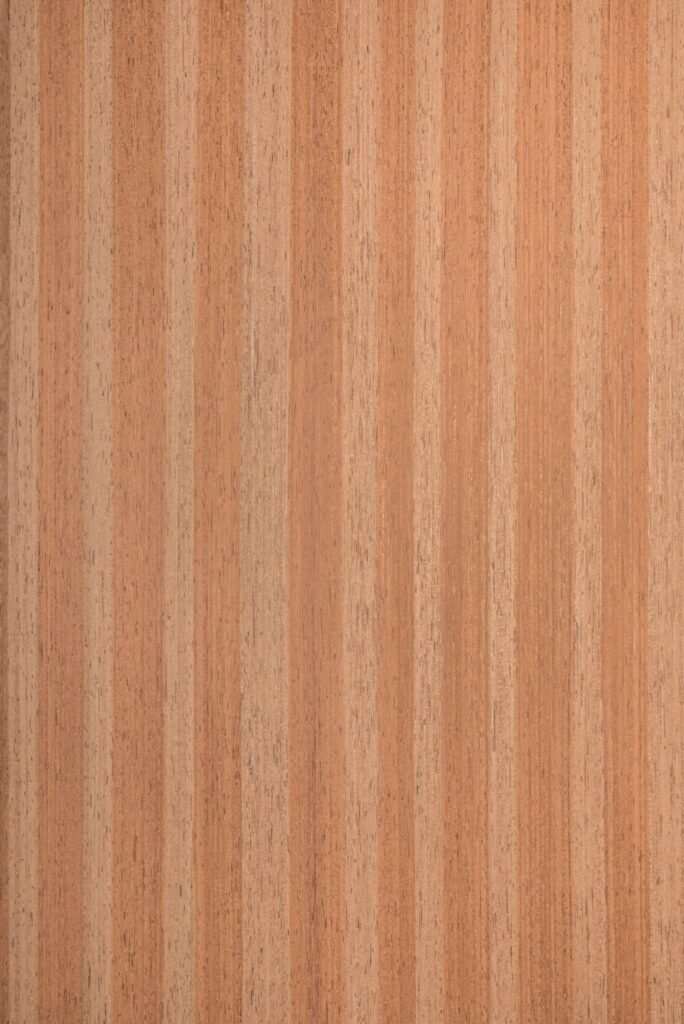
| Quartersawn, selected for stripe | premium | Visible panels and instruments |
See the sapele product page for current stock and our full African hardwood prices list for other species.
The seven things that move the sapele price
1. Grade
FAS boards are long, wide and mostly clear. They cost more than common grades because they come from the best logs. If you cut most of your parts short, a lower grade can give you the same finished pieces for less money. Our guide to hardwood lumber grades explains the system.
2. Drying
Kiln drying adds energy, kiln time and handling. It also removes risk for you, because wet sapele moves and twists after machining. For furniture and joinery, kiln-dried stock at 10–12% moisture content is almost always worth the premium. Read kiln dried vs air dried lumber.
3. Thickness and width
Standard thicknesses of 27, 32, 40 and 52 mm are the easiest to supply. Thicker boards and guaranteed wide boards need bigger, better logs and usually cost more per cubic metre.
4. Length
Random lengths are cheaper than fixed lengths. If you can accept a range, for example 2.1–5.5 m, the mill can use more of each log and pass the saving on to you.
5. Special selection
Quartersawn stock with a regular ribbon stripe, colour-matched bundles or boards free of sapwood all take extra sorting time, which adds to the price.
6. Volume
A full 40ft container gets a better price per cubic metre than a small trial order, because handling and paperwork are spread over more timber.
7. Season and market
Rainy seasons slow logging and road transport. Fuel costs, exchange rates and demand from big markets also move prices during the year.
From FOB price to landed cost
The FOB price is only the start. To know what sapele really costs at your warehouse, add:
- sea freight and insurance if you buy FOB;
- import duties and VAT or sales tax in your country;
- customs broker and port handling fees;
- inland transport to your site;
- any inspection or certification you ask for.
Our guide to timber shipping cost explains how freight is calculated.
How much sapele fits in a container?
Kiln-dried sapele weighs roughly 650–700 kg/m³. A 40ft container usually takes about 38–45 m³ of boards, often limited by weight rather than space. A 20ft container usually takes about 20–22 m³. See how much timber fits in a 40ft container.
A worked example
A furniture workshop orders 40 m³ of kiln-dried FAS sapele in 27 and 52 mm, random widths and lengths. The timber value at an indicative FAS kiln-dried price is the volume multiplied by the price per m³. The buyer then adds sea freight for one 40ft container, insurance, duties and delivery. Dividing the total by 40 gives the landed cost per cubic metre, which is the number to compare with local stockists. In many markets, importing a full container directly works out noticeably cheaper per m³ than buying small lots from a local yard.
How to compare sapele quotes
Before you compare prices, check that each quote states:
- species with scientific name, Entandrophragma cylindricum;
- grade and grading rules;
- thicknesses, width and length ranges;
- moisture content and drying method;
- nominal or actual measure;
- Incoterm and port;
- documents included;
- lead time and validity.
A quote that is $100 cheaper per m³ but air dried and in a lower grade is not cheaper at all once you count waste and rework.
Seven ways to lower your sapele cost
- Accept random lengths wherever your cutting list allows.
- Use FAS 1F for parts where only one face shows.
- Use common grades or shorts for small components.
- Order full containers, or share a container with another species.
- Plan ahead, so we can schedule kiln time efficiently.
- Consider kossipo for hidden and painted parts. See kossipo vs sapele.
- Agree a regular supply, which often brings better pricing than one-off orders.
Why cheap sapele can cost more
Very low offers usually hide something: wet timber sold as kiln dried, mixed species such as tiama or kossipo sold as sapele, short measure, heavy sapwood or missing legality documents. Each of these costs you money later through waste, rework or delays at customs. Always ask for moisture readings, photos of the actual bundles and the full document list before paying.
Sapele vs other species on price
| Species | From (USD/m³, FOB) | Typical use |
|---|---|---|
| Kossipo | $750 | Painted joinery, frames |
| Sapele | $850 | Furniture, doors, floors |
| Sipo | $900 | Windows, doors |
| African mahogany | $950 | Furniture, boats, guitars |
| Iroko | $950 | Outdoor joinery, decking |
Compare sapele with its relatives in sapele vs sipo and sapele vs mahogany.
Documents included in the price
Every sapele shipment we send includes a commercial invoice, packing list, bill of lading, certificate of origin, phytosanitary certificate and legality and chain-of-custody documents. Sapele is not CITES listed, so there is no permit cost or delay. For EU buyers, we also prepare the information you need for EUDR due diligence. See our guide to EUDR timber compliance.
Payment terms
Most container orders are paid with a deposit by bank transfer and the balance against copy shipping documents, or by letter of credit. Terms are agreed on the pro-forma invoice before production starts. Read our guide to buying timber with a letter of credit.
Lead times
Standard sawn sapele can often be prepared in a few weeks. Kiln-dried FAS stock usually takes 4–8 weeks before loading, then 3–7 weeks of sea transit depending on your port. Planning a regular schedule removes most waiting.
Sapele price by end use
What you should pay depends on what you make. A door factory painting its products does not need the same stock as a guitar maker selling clear-finished instruments. As a rough guide:
- Painted doors, frames and mouldings: FAS 1F or common grades, kiln dried, random lengths. Lowest cost per finished part.
- Furniture with clear finishes: FAS kiln dried, with some width selection for tops and panels.
- Flooring and stair treads: common grades or strips for flooring, thick FAS for treads.
- Instruments and premium veneered work: selected quartersawn stock, priced individually.
Tell us your product, and we will suggest the most economical grade mix. In many orders, splitting the volume between two grades lowers the average price per m³ by a useful margin.
How prices have moved
Sapele prices have generally drifted upward over the past decade, driven by stricter legality rules, higher fuel and transport costs, and more local processing in producer countries. The regional plan to stop log exports from Central Africa, now set for January 2028, will push even more value-added processing into African mills. For buyers of sawn and kiln-dried sapele, this is mostly good news: more capacity for dried, graded stock close to the forest.
Common mistakes
- Comparing FOB with CIF prices: always compare on the same Incoterm.
- Ignoring moisture content: wet and dry sapele are different products.
- Paying FAS prices for short parts: use the right grade for each part.
- Forgetting freight in the budget: calculate landed cost, not just FOB.
Sources
- International Tropical Timber Organization for market reports.
- Entandrophragma cylindricum on Wikipedia
Related guides
- African hardwood prices per m³
- Sapele vs sipo
- Kossipo vs sapele
- How to import timber from Africa
- Furniture and joinery hardwoods
Frequently asked questions about sapele wood price
How much does sapele cost per m³?
Our sapele starts from about $850 per m³ for standard sawn grade, FOB Central Africa. Kiln-dried FAS stock costs more.
How much is sapele per board foot?
At $850 per m³, roughly $2.00 per board foot before freight and duties.
Is sapele cheaper than mahogany?
Usually yes. African mahogany starts from about $950 per m³ and also needs a CITES permit.
What is the minimum order for sapele?
Usually one 20ft container, though mixed containers and smaller trial orders are possible.
Get a firm sapele price
Send your grade, sizes, moisture content and volume through our quote form. We will reply with a firm price, stock photos and the expected container load.