Two quotes for “sapele boards” can differ by hundreds of dollars per cubic metre, and both can be fair. The difference is usually the grade. Understanding hardwood lumber grades is essential if you want to compare offers honestly, avoid disappointment on arrival and pay only for the quality you actually need.
In this guide we explain the main appearance grades used in the hardwood trade, how they apply to African timber, how structural grading works, and how to choose and specify the right grade. We grade and ship African hardwood every week at Global Timber Trade Hub.
In short
- Appearance grades measure how much clear, usable wood a board yields.
- FAS is the top general grade: long, wide boards with a high share of clear wood.
- FAS 1F and Selects are slightly lower, often better value.
- Common grades yield shorter clear pieces and suit small components.
- Structural grades assign strength classes for engineering use.
- Always state the grading rules and grade in your order.
Why grading matters
Every log produces boards of different quality. Some are long, wide and almost free of defects. Others have knots, splits or sapwood that limit what you can cut from them. Grading sorts boards into categories so buyers know what they are getting and can choose the grade that fits their product. Buying a higher grade than you need wastes money; buying a lower grade than you need wastes time and wood in your workshop.
Appearance grades vs structural grades
- Appearance grades measure the yield of clear, defect-free wood from a board. They are used for furniture, joinery, flooring and anything where looks and clear cuttings matter.
- Structural grades measure strength. They assign a strength class used by engineers for beams, bridges, piles and other load-bearing elements.
A board can be a low appearance grade and still be perfectly strong, or a high appearance grade that is not graded for structure. Always use the right type of grade for your project.
The NHLA grading system
Many international buyers use grades based on the rules of the National Hardwood Lumber Association (NHLA), originally developed for North American hardwoods and widely applied in the international trade. The main grades are:
| Grade | Typical minimum board | Clear yield (approx.) | Typical use |
|---|---|---|---|
| FAS (Firsts and Seconds) | 6 in wide, 8 ft long | about 83% clear | Furniture, mouldings, joinery |
| FAS 1 Face (F1F) | As FAS on the best face | Best face FAS, other face No.1 Common | Cabinets, panels, one-sided parts |
| Selects | 4 in wide, 6 ft long | Best face FAS-like | Furniture, joinery |
| No.1 Common | 3 in wide, 4 ft long | about 67% clear | Cabinet parts, flooring, furniture components |
| No.2A Common | 3 in wide, 4 ft long | about 50% clear | Flooring, small parts, rustic products |
This is a simplified summary. The full rules define cutting sizes, number of cuttings and many details. Read the NHLA rules for the full system.
How African timber is graded
African mills grade sawn timber according to the market. For exports to Europe, many use the grading rules for African tropical sawn timber published by the ATIBT, the international tropical timber technical association. For buyers in Asia, the Middle East and North America, mills often grade to FAS and Common grades based on NHLA-style rules. Some mills also use their own commercial grades, such as “FAS” and “FAS/1F” mixes or “Choice” grades for decking and construction.
Because rules and grade names differ, always ask which rules a quote refers to. If in doubt, describe your requirement in plain terms: minimum width and length, maximum defects and clear yield.
Common terms in African timber quotes
- FAS: long, wide, mostly clear boards for furniture and joinery.
- FAS 1F: one good face, the other slightly lower; good value for one-sided parts.
- Random widths and lengths (RW/RL): boards supplied in mixed sizes within a range.
- Strips: narrow boards, often below FAS width, used for flooring and small parts.
- Shorts: short lengths, cheaper and ideal for small components.
- Merchantable or construction grade: structural and general-purpose timber with defects allowed.
Structural grading and strength classes
For engineering uses, hardwood is graded visually or by machine against standards such as EN 14081 in Europe, often with species-specific rules. The grader checks slope of grain, knots, splits, wane and other features. The result is a strength class, such as D40, D50, D60 or D70 for hardwoods, which engineers use in design calculations.
Dense African species such as Azobe, Okan and Tali commonly reach the highest classes. See our guide to okan vs azobe.
Which grade do you need?
| Product | Suggested grade |
|---|---|
| Tabletops and visible furniture | FAS |
| Cabinet doors and panels | FAS or FAS 1F |
| Chair and furniture components | No.1 Common or shorts |
| Windows and doors (laminated) | FAS 1F or No.1 Common, defects cut out |
| Flooring | No.1 Common, strips |
| Mouldings | FAS or finger-jointed lower grades |
| Beams, bridges, piles | Structural strength class |
| Decking | Decking grade specified by defects and profile |
Grade and price
Higher grades cost more per cubic metre because they come from fewer, better logs and yield more clear wood. But the cheapest grade is not always the cheapest choice. If you need long, clear parts, a lower grade may waste so much wood in cutting that it costs more in the end. Calculate your cost per usable part, not per cubic metre. Our guide to African hardwood prices explains other price factors.
Grading and moisture content
Grade and dryness are separate. A FAS board can be fresh sawn, air dried or kiln dried. Always specify both: for example, “FAS, kiln dried to 10% ± 2%”. Drying can also create defects such as checks and warp, so ask whether grading was done before or after drying. Read our guide to kiln dried vs air dried lumber.
Nominal vs actual measure
Some markets quote volume on nominal (rough-sawn) sizes, others on actual sizes. A board sold as 27 mm rough-sawn will be thinner after planing. Make sure you know which measure a quote uses, especially when comparing offers.
How to specify a grade in your order
- Name the grading rules: NHLA, ATIBT or a described commercial grade.
- Name the grade: FAS, FAS 1F, No.1 Common, strength class, and so on.
- Give thickness, minimum width and length range.
- Add any special requirements: no sapwood, colour sorting, quartersawn, etc.
- State moisture content and tolerance.
Checking grade on arrival
When the container arrives, open a few bundles and check a sample of boards against the agreed grade. Measure widths and lengths, look at both faces and note defects. Compare with the photos sent before loading. If something does not match, record it with photos and contact the supplier straight away. For large orders, you can appoint an independent grading inspector before loading.
Grading decking and cladding
Decking and cladding are usually not graded under furniture rules. Instead, they are specified by profile, size and allowed defects: for example, no loose knots, no through-splits, limited sapwood and a maximum length of end checks. Colour variation is often accepted as natural. For premium decks in species such as Padouk or Doussie, you can ask for a selected, more uniform grade at a higher price. See our guides to the best hardwood for decking and hardwood cladding.
Grading instrument and specialty stock
Musical instrument wood, veneer flitches and figured boards follow their own, stricter selection. Instrument blanks are graded for grain orientation, run-out, figure, colour and freedom from defects, often piece by piece. Figured stock is priced individually. If you need this kind of selection, describe it clearly in your enquiry and ask for photos of the actual pieces.
A worked example: choosing between FAS and No.1 Common
Imagine a furniture maker who needs chair legs 45 × 45 mm and 450 mm long, and tabletops made of boards 1.8 m long and 150 mm wide. For the tabletops, FAS is the right choice, because the maker needs long, wide, clear boards and FAS guarantees them. For the chair legs, No.1 Common can be far more economical. Its boards contain plenty of clear cuttings of 450 mm and more, and the defects between them fall into the waste that would be cut away anyway. Ordering both grades in the same container, rather than FAS for everything, can lower the timber cost per chair noticeably without any visible change in quality.
How we grade and document
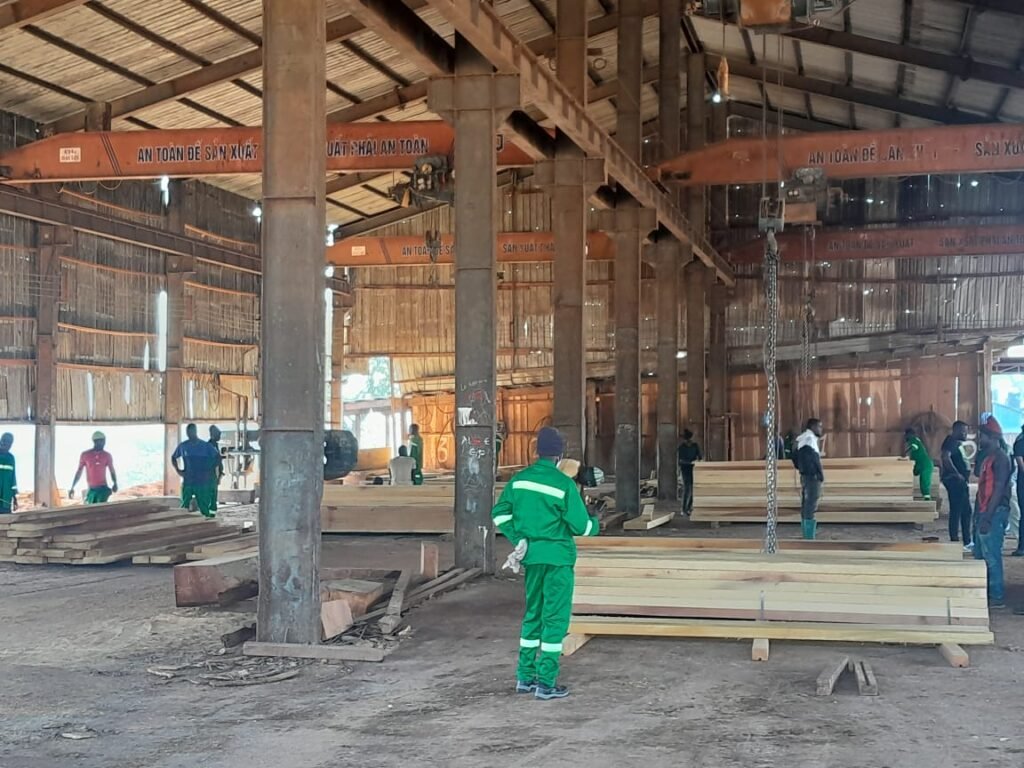
For appearance grades, our partner mills grade each board and bundle them by grade, thickness and length range. Before loading, we photograph a sample of boards from each bundle, both faces, and include the grade, volume and moisture readings in the packing list. For structural orders, grading is carried out to the standard and strength class you specify, and grading certificates can be provided where your project requires them.
Common mistakes
- Comparing quotes with different grades: always compare like with like.
- Buying FAS for small parts: a common grade may be far cheaper per part.
- Using appearance grades for structure: structural uses need structural grading.
- Not naming the rules: “FAS” can mean different things to different mills.
- Ignoring moisture: grade and dryness must both be specified.
Sources
- National Hardwood Lumber Association
- ATIBT, International Tropical Timber Technical Association
- Lumber on Wikipedia
Related guides
- Kiln dried vs air dried lumber
- African hardwood prices per m³
- How to import timber from Africa
- Sapele vs mahogany
- Timber buying FAQ
Frequently asked questions about hardwood lumber grades
What does FAS mean in lumber?
FAS means Firsts and Seconds, the top general appearance grade, with long, wide boards and a high share of clear wood.
What is the difference between FAS and FAS 1F?
FAS 1F has one face meeting FAS and the other face meeting a lower grade, which makes it good value for one-sided parts.
Is No.1 Common good enough for furniture?
Yes, for components cut into shorter pieces. For long, visible parts, FAS is usually better.
What are structural strength classes?
Classes such as D40 to D70 that describe the strength of graded hardwood for engineering design.
Get a quote with the right grade
Send your product, sizes and grade requirements through our quote form. We will recommend the most economical grade for your use and reply with a firm price.