Iroko and sapele are two of the best-selling African hardwoods in Europe, the UK, the Middle East and North America. Both are strong, stable, available in large sizes and reasonably priced. But they are not interchangeable. Iroko is the outdoor specialist, often called African teak. Sapele is the elegant joinery and furniture wood, often compared with mahogany. When buyers compare iroko vs sapele, the right answer depends mainly on where the wood will live and how it should look.
In this guide we compare the two on durability, colour, grain, hardness, stability, working, finishing, health and safety, sizes and price. At Global Timber Trade Hub we supply both from Central Africa, so we can give a practical view from the trade, not just from data sheets.
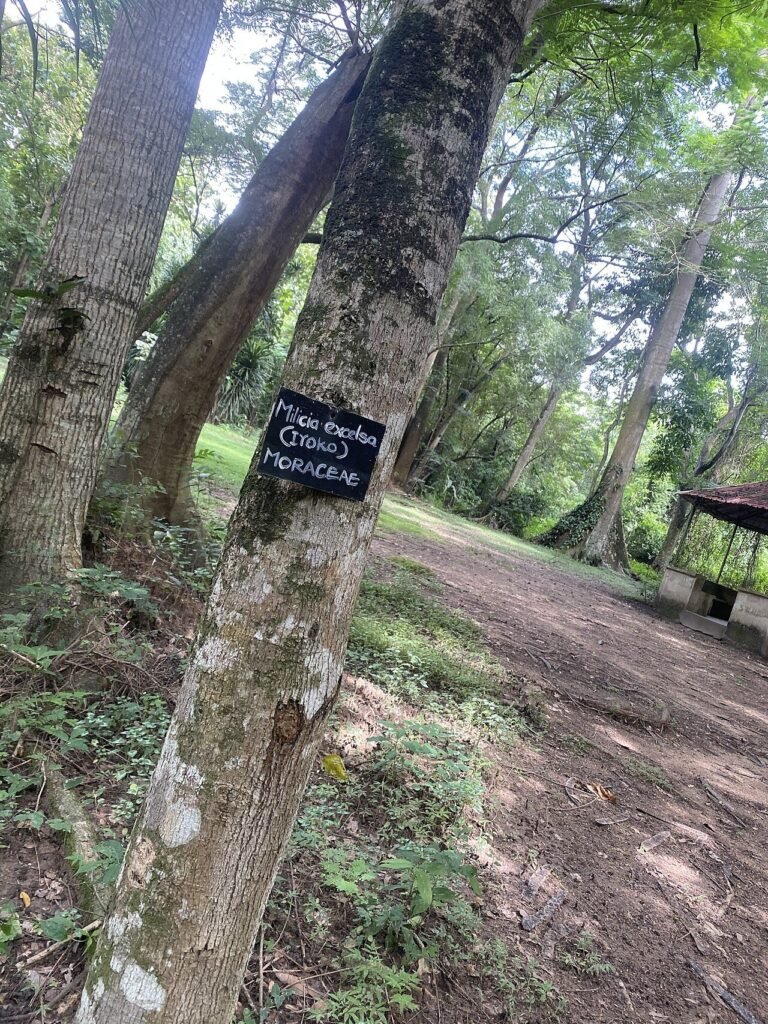
In short
- Iroko is much more durable outdoors; sapele is moderately durable.
- Sapele is red-brown with ribbon figure; iroko is golden brown and darkens.
- Sapele is slightly harder and has a finer texture.
- Both are stable when kiln dried; quarter-sawn sapele is very stable.
- Iroko dust is a stronger irritant; use good extraction.
- Sapele usually costs a little less per cubic metre.
Quick comparison
| Property | Iroko | Sapele |
|---|---|---|
| Botanical name | Milicia excelsa, M. regia | Entandrophragma cylindricum |
| Colour | Yellow-brown, darkens to golden brown | Pinkish to red-brown, deepens |
| Figure | Interlocked, sometimes mild stripe | Strong ribbon on quarter-sawn |
| Density (dry) | about 640–700 kg/m³ | about 640–700 kg/m³ |
| Janka hardness | about 5,600 N | about 6,300 N |
| Texture | Medium to coarse | Fine |
| Outdoor durability | Durable to very durable | Moderate |
| Typical uses | Decking, outdoor furniture, boats, cladding | Furniture, kitchens, windows, doors |
| From (USD/m³, FOB) | $950 | $850 |
Figures are typical published values and indicative starting prices for kiln-dried sawn stock.
Durability: the big difference
Iroko heartwood is naturally durable against fungi and many insects. It is used for outdoor furniture, decking, cladding, garden structures, boat building, laboratory benches and even marine work. It can be left outside unfinished and will weather to a silver-grey while staying sound for many years. Sapele is moderately durable. It works well for painted or stained windows and doors that are maintained, but it is not the best choice for decks, ground contact or unfinished outdoor furniture. If the wood will face rain and sun every day, iroko is the safer choice.
Colour and appearance
Fresh iroko is yellow to light brown and darkens quickly in light to a warm golden brown, close to teak. Some boards show lighter and darker bands. Sapele starts pinkish brown and deepens to a rich red-brown, like mahogany. Quarter-sawn sapele shows a striking ribbon stripe that many furniture buyers love. Iroko has a more rustic, natural look; sapele looks more formal and refined.
Grain and texture
Both woods have interlocked grain. Iroko’s texture is medium to coarse, and it can contain hard calcium deposits, sometimes called stone, that blunt cutters. Sapele has a finer texture and a smoother surface after planing and sanding, which helps when you want a high-gloss finish.
Hardness and wear
Sapele is a little harder than iroko. Both are hard enough for floors, stair treads, worktops and tables. In outdoor decking, iroko’s durability matters more than its hardness. Indoors, sapele’s slightly higher hardness and finer texture give a smoother wearing surface.
Stability
Iroko is very stable once dry, which is one reason it is used for outdoor furniture and boat parts that go through wet and dry cycles. Sapele is stable when quarter-sawn, and good when flat-sawn. Both suit windows and doors when properly kiln dried. For outdoor parts that get wet often, iroko keeps its shape better over time.
Working properties
Both machine well with sharp tools. Interlocked grain in both can tear out when planing, so use low cutting angles or spiral heads. Iroko’s mineral deposits can damage cutters, so carbide tooling is wise. Sapele is generally the easier and cleaner wood to machine for fine joinery. Both glue, screw and nail well with pre-drilling.
Dust and health
Iroko dust is a known irritant and sensitiser for some people, causing skin rashes, asthma-like symptoms or eye irritation. Sapele dust can also irritate, but iroko has a stronger reputation. Use good dust extraction, a well-fitting mask and skin protection when machining large amounts of either wood.
Finishing
Iroko is oily, so some finishes dry slowly. Wipe the surface with a solvent before finishing if your coating supplier recommends it. Outdoor oils are the usual choice. Sapele takes lacquer, oil, stain and paint very well, and its fine texture gives a smooth result. For a glossy furniture finish, sapele is the easier wood.
Board sizes and supply
Both species grow into large trees, so wide, long, clear boards are available. Sapele is one of the most widely available African hardwoods. Iroko supply is good but depends on the country and season. Both can be supplied as boards, beams, squares and decking. See our wholesale hardwood lumber guide.
Price
Sapele usually costs a little less than iroko, starting from about $850 per m³ FOB compared with about $950 for iroko. Prices change with grade, thickness, drying and volume. See our iroko wood price and sapele wood price guides.
Best uses for iroko
- Outdoor furniture, benches and garden structures.
- Decking, cladding and pergolas.
- Boat building parts and marine joinery.
- Laboratory benches and wet-area worktops.
- Exterior doors, sills and window parts that face heavy weather.
Best uses for sapele
- Furniture, dining tables and desks.
- Kitchen cabinets, doors and panelling.
- Stairs and handrails.
- Painted and stained windows and doors.
- Guitar backs, sides and necks.
Iroko vs sapele for windows and doors
Both are popular in window and door factories. Sapele is often chosen for painted or stained windows because of its fine texture, stability and cost. Iroko is chosen for oiled or lightly finished joinery that faces strong weather, and for sills and bottom rails that take the most water. Some manufacturers use iroko for sills and sapele for the rest of the frame. See our best wood for window frames and best wood for exterior doors guides.
Iroko vs sapele for outdoor furniture
For garden furniture that stays outside all year, iroko is the clear choice. It does not need finishing, weathers to grey and lasts for many years. Sapele garden furniture needs regular oiling and covered storage to last. Hotels and restaurants often choose iroko for terrace furniture for this reason. See best wood for outdoor furniture.
Iroko vs sapele for kitchens
Both are used for kitchen worktops. Iroko is more water resistant, which helps around sinks, and its golden colour suits country kitchens. Sapele gives a richer colour and a smoother finish, and it suits cabinets and doors well. Many kitchens use sapele for cabinets and iroko for the worktop next to the sink. See our best wood for kitchen worktops guide.
Iroko vs sapele for boats
Boat builders use iroko for keels, frames, deck parts and trim because of its durability and stability. Sapele is used for interior joinery, panels and veneered plywood on boats. For any part that will be wet, iroko is the better choice. See best wood for boat building.
Sustainability and legality
Both species are harvested in Central and West African forests under national forest laws, and both are available from some FSC-certified concessions. Neither is CITES listed today, although the Entandrophragma genus that includes sapele has been flagged for future review. EU buyers must meet due diligence rules for both. See our sustainability page.
Buying iroko and sapele together
Many buyers order both species in one container: sapele for furniture and joinery, iroko for outdoor and wet-area work. Mixing species in one shipment helps smaller buyers fill a container and spread freight costs. Browse our best-selling African timber.
Iroko vs sapele for cladding and decking
For external cladding, iroko is a proven choice: it is durable, stable and weathers evenly to grey if left unfinished. Sapele cladding can look beautiful at first, but it needs a protective finish and regular maintenance, and unfinished sapele will check and discolour more quickly. For decking, iroko is again the better of the two, though for heavy-use decks we often suggest denser species such as tali, okan or doussie. See our hardwood cladding and best hardwood for decking guides.
Moisture content
For indoor use, order both species kiln dried to 8–10%. For exterior joinery, 12–16% is common, depending on climate. Outdoor structures in large sections may be supplied air dried. Tell us the end use and we will suggest the right moisture range.
Lead times
Kiln-dried sapele and iroko can usually be prepared in 4–8 weeks before loading, depending on sizes and volume. Shipping to Europe takes around 2–4 weeks. Our export process page explains each step from order to delivery.
Common mistakes
- Using sapele for decks: it is not durable enough for constant wet exposure.
- Dull cutters on iroko: mineral deposits damage tools.
- No dust protection: iroko dust can cause reactions.
- Finishing oily iroko without preparation: some coatings dry poorly.
Our honest advice
If the wood goes outside, choose iroko. If it stays indoors and you want a fine, warm, refined look, choose sapele. For windows and doors, both work: sapele for painted and stained joinery, iroko for oiled and heavily exposed parts. Many workshops keep both on hand and use each where it performs best.
Sources
Related guides
Frequently asked questions about iroko vs sapele
Is iroko better than sapele outdoors?
Yes. Iroko is much more durable outdoors and can be left unfinished.
Which is harder, iroko or sapele?
Sapele is slightly harder and has a finer texture.
Is iroko more expensive than sapele?
Usually a little, starting around $950 per m³ FOB versus about $850 for sapele.
Can sapele be used for exterior doors?
Yes, with a good finish and maintenance; iroko is better for heavy exposure.
Get a quote for iroko or sapele
Send us your species, grade, thicknesses and volume through our quote form. We will reply with a firm price and lead time.