Looking at iroko vs teak because teak prices have gone through the roof? You are not alone. Boat builders, garden furniture makers and joinery firms ask us this almost every week. Iroko is often called “African teak”, and for many outdoor projects it does a very similar job. But it is not a copy of teak, and knowing where the two differ will save you money and disappointment.
Below we compare them honestly, point by point, and explain when iroko is the smarter buy and when teak is still worth the premium. We export iroko from Central Africa at Global Timber Trade Hub, so we also share what our buyers actually use it for.
In short
- Iroko and teak are both very durable outdoors.
- Teak is oilier and more stable; iroko is slightly harder.
- Both weather to silver-grey if left unfinished.
- Iroko costs a fraction of plantation or old-growth teak.
- Iroko is easy to source in container volumes from Central Africa.
- For decks, cladding, benches and most boat work, iroko is excellent value.
Two different trees, one reputation
Teak (Tectona grandis) grows in South and Southeast Asia, with large plantations in Asia, Africa and Latin America. Old-growth Burmese teak is the benchmark for yacht decks and outdoor furniture.
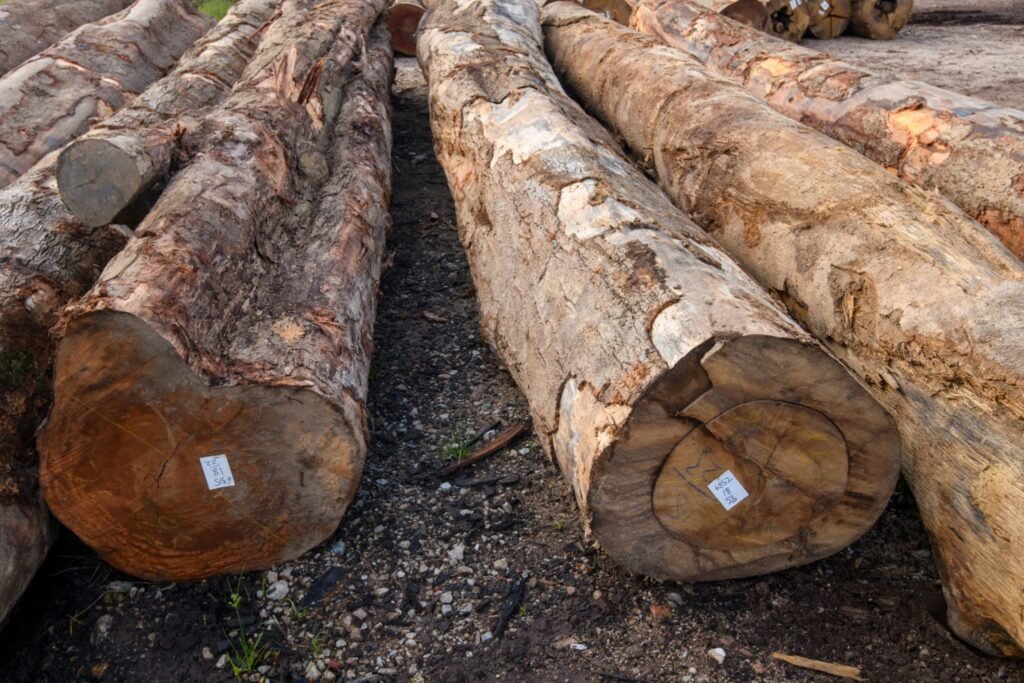
Iroko (Milicia excelsa and Milicia regia) is a large tree of the African rainforest belt, including Cameroon, Gabon and the Congo Basin. It is not related to teak, but it shares many of the qualities that made teak famous.
Iroko vs teak at a glance
| Property | Iroko | Teak |
|---|---|---|
| Density at 12% MC | 640–690 kg/m³ | about 630–660 kg/m³ |
| Janka hardness | about 1,260 lbf | about 1,070–1,150 lbf |
| Natural durability | Very durable | Very durable |
| Stability | Good, low shrinkage | Excellent |
| Natural oils | Some | High |
| Colour when fresh | Yellow to golden-brown | Golden to medium brown |
| CITES | Not listed | Not listed |
Values vary with growth conditions. Plantation teak in particular can be softer and less durable than old-growth teak.
Durability outdoors
Both woods resist rot, fungi and most insects without chemical treatment. That is the main reason people choose them. In our experience, well-installed iroko decking and cladding lasts for decades, much like teak.
One honest caveat: old-growth teak still has the edge in very harsh marine settings, thanks to its high oil and silica content. Plantation teak, which is what most suppliers sell today, does not always match that reputation.
Stability and movement
Teak is one of the most stable woods in the world. It barely moves between wet and dry seasons, which is why it is used for boat decks that are soaked by day and baked by sun.
Iroko is also stable, with low shrinkage, and performs very well in doors, windows and exterior joinery. It moves a little more than teak, so for laid yacht decks with tight seams, teak is still the reference. For most outdoor projects, iroko’s stability is more than enough.
Looks and ageing
Fresh iroko is quite yellow. Within weeks it darkens to a warm golden-brown that most people find very close to teak. Left unfinished outdoors, both turn a soft silver-grey.
The grain differs slightly. Teak tends to be straighter and more even. Iroko can show interlocked grain, which gives a subtle stripe on quartersawn faces. Once oiled, many clients cannot tell them apart from a few metres away.
Working with iroko vs teak
Iroko in the workshop
Iroko can tear out when planed because of its interlocked grain, and it may contain hard calcium deposits that blunt steel tools. Use carbide blades and sharp, helical cutters. Wipe joints with acetone before gluing, because the natural oils can weaken some glue bonds.
Teak in the workshop
Teak works well but is notorious for dulling tools, because of its silica. Its oiliness also makes gluing and some finishes tricky. In practice, both woods ask for carbide tooling and careful surface preparation.
Health and safety
Iroko dust can irritate skin and airways in some people. Teak dust can too. Use good dust extraction and a mask when sanding either wood. This is standard practice with most tropical hardwoods.
Price: where iroko really wins
This is usually what ends the iroko vs teak debate. Iroko on our site starts from about $950 per m³ for standard sawn grade, FOB Central Africa. Quality teak typically costs several times that, and old-growth Burmese teak is in another league entirely.
For a 40 ft container of decking or cladding, the difference can pay for the freight several times over. See current prices on the African iroko product page.
Availability and legal supply
Teak supply has tightened. Myanmar teak in particular faces strong import restrictions in many markets. Plantation teak is easier to find but more variable in quality.
Iroko is available in container volumes from legally managed concessions in Central Africa. It is not CITES listed, so the paperwork is simpler. Every shipment we send includes legal-origin and phytosanitary documents. More on that on our sustainability page.
Iroko vs teak for boat building
Iroko is a well-established boat building timber for frames, rubbing strakes, trim, cockpit soles, hatches and interior joinery. Many builders use iroko for structure and keep teak only for laid decks.
If your budget does not allow teak decks, iroko or Afrormosia are the two African woods we most often supply as alternatives.
Iroko vs teak for outdoor furniture
For garden tables, benches and loungers, iroko is an excellent and much cheaper option. It is strong, durable and takes teak oil well. Many commercial outdoor furniture ranges sold as “hardwood” are iroko.
Iroko vs teak for decking and cladding
Iroko is one of our most requested decking species. It stays reasonably flat, resists decay and weathers evenly. For high-traffic public boardwalks, harder species such as Azobe or Bilinga may be better. Our guide to the best hardwood for decking compares them.
When teak is still worth it
- Laid yacht decks with caulked seams where stability is critical.
- Luxury projects where the client asks for teak by name.
- Very harsh, constantly wet marine settings where old-growth teak is specified.
When iroko is the smarter buy
- Decking, cladding and outdoor structures.
- Garden furniture and benches.
- Exterior doors, windows and sills.
- Boat frames, trim and interior joinery.
- Any project where budget matters and volume is high.
Finishing and maintenance
Whether you choose iroko or teak, you have two options outdoors: let it weather, or keep the colour.
If you let it weather, do nothing. Within a season or two the surface turns silver-grey. The wood underneath stays sound, and maintenance is limited to an occasional clean with a soft brush and water.
If you want to keep the warm brown colour, oil the wood when new and then once or twice a year. Teak oil, hardwood decking oil or a UV-protective oil all work on iroko. Clean the surface first and apply thin coats; thick coats stay sticky and attract dirt.
On boats, many builders varnish iroko trim with a marine varnish. Prepare the surface well, wipe with acetone to remove surface oils, and build several thin coats.
Fixings and installation tips
- Use stainless steel fixings: plain steel can react with the wood and leave dark stains, especially when wet.
- Pre-drill near the ends of boards to avoid splitting.
- Leave expansion gaps on decks and cladding, typically 5–6 mm between deck boards.
- Seal end grain after cutting to reduce checking.
- Let the timber acclimatise on site for a few days before final fitting.
How to specify iroko when you order
To get an accurate price and the right material, tell us:
- the use: decking, cladding, joinery, furniture or boat work;
- the product form: rough-sawn, planed, profiled decking, beams;
- thickness, width and length range;
- grade, usually FAS for joinery and furniture;
- moisture content: kiln dried for joinery, air dried for heavy outdoor sections;
- volume and destination port.
With these details we can quote iroko precisely and, if you also have a teak quote, help you compare like with like.
Common mistakes when switching from teak to iroko
- Using teak glue habits: always degrease iroko joints before gluing.
- Judging colour on day one: fresh iroko is yellow and darkens quickly.
- Ignoring grain on quartersawn boards: plan for interlocked grain when planing.
- Specifying the wrong dryness: furniture needs kiln-dried stock, not air-dried.
Sizes and product forms
We supply iroko as rough-sawn boards, kiln-dried joinery stock, decking profiles, beams and, where export is legally allowed, logs. Standard thicknesses run from 27 mm to 100 mm, and we cut to your list on request.
The real cost over 20 years
The purchase price is only the start. Over the life of a deck or a garden bench, what you spend on maintenance and repairs often matters more. Both woods can last 20 years or more outdoors. Teak needs a little less care to stay smooth, but the price gap at purchase is so wide that Iroko usually stays cheaper over two decades, even with an extra oiling each year. For a large project, that saving can pay for the whole substructure.
What our customers use Iroko for
Looking at last year’s orders, most of our Iroko went into garden furniture, window and door frames, worktops, laboratory benches and boat interiors. Joinery workshops like it because it machines cleanly and glues well once the surface is freshly planed. Furniture makers like the way the golden colour deepens to a rich brown within a few months. If your project is close to one of these, Iroko is a safe, well-proven choice.
Sources
- CIRAD Tropix for technical data on iroko and other tropical species.
- Milicia excelsa on Wikipedia for background on the iroko tree.
- Teak on Wikipedia for background on teak.
Related guides
- Buy African iroko wood
- Afrormosia, another teak alternative
- Best hardwood for decking
- Best wood for marine construction
- Sapele vs mahogany
Frequently asked questions about iroko vs teak
Is iroko as good as teak?
For most outdoor uses, yes. Iroko is very durable and slightly harder. Teak is more stable and oilier, which still matters for laid yacht decks.
Why is iroko called African teak?
Because it looks similar once aged and offers similar outdoor durability, at a much lower price.
Can I use teak oil on iroko?
Yes. Teak oil and other penetrating oils work well on iroko and help keep its golden-brown colour.
Does iroko need a CITES permit?
No. Iroko is not CITES listed. It ships with legal-origin, phytosanitary and origin documents.
Get a quote for iroko
Planning a deck, a boat or an outdoor furniture range? Send your sizes and volume through our quote form and we will reply with price per m³, stock photos and shipping options to your port.