Timber facades have become a signature of modern architecture. They soften buildings, store carbon and age gracefully into silver-grey surfaces that blend with landscapes and streets. Softwood cladding is common, but hardwood cladding offers longer life, better stability and a more refined look, often without any chemical treatment.
In this guide we explain which African hardwoods work best for cladding, how to choose profiles, how to fix boards so they last, what to expect as they weather, and what it all costs. We supply cladding timber from Central Africa at Global Timber Trade Hub.
In short
- Choose a hardwood with natural durability class 1 or 2 for cladding.
- Iroko, Bilinga, Okan, Doussie and Padouk are proven cladding species.
- A ventilated cavity behind the boards is essential for long life.
- Use stainless steel fixings to avoid stains and corrosion.
- Unfinished hardwood weathers to silver-grey within one to two years.
- Well-detailed hardwood cladding can last 40 years or more.
Why choose hardwood cladding?
- Durability: very durable species resist decay for decades without treatment.
- Stability: many hardwoods move less than softwoods, so boards stay flat.
- Density: hardwood resists knocks, abrasion and vandalism better.
- Appearance: fine textures and rich colours, then an even silver patina.
- Sustainability: timber stores carbon and has lower embodied energy than many facade materials.
The best African species for cladding
| Species | Durability | Stability | Fresh colour | From (USD/m³) |
|---|---|---|---|---|
| Iroko | Very durable | Good | Golden brown | $950 |
| Bilinga | Very durable | Good | Golden orange | $700 |
| Okan | Class 1 | Medium | Olive to reddish-brown | $650 |
| Doussie | Very durable | Excellent | Golden to reddish-brown | $1,350 |
| Padouk | Very durable | Very good | Red to red-brown | $1,300 |
| Movingui | Moderately durable | Good | Golden yellow | $750 |
Iroko
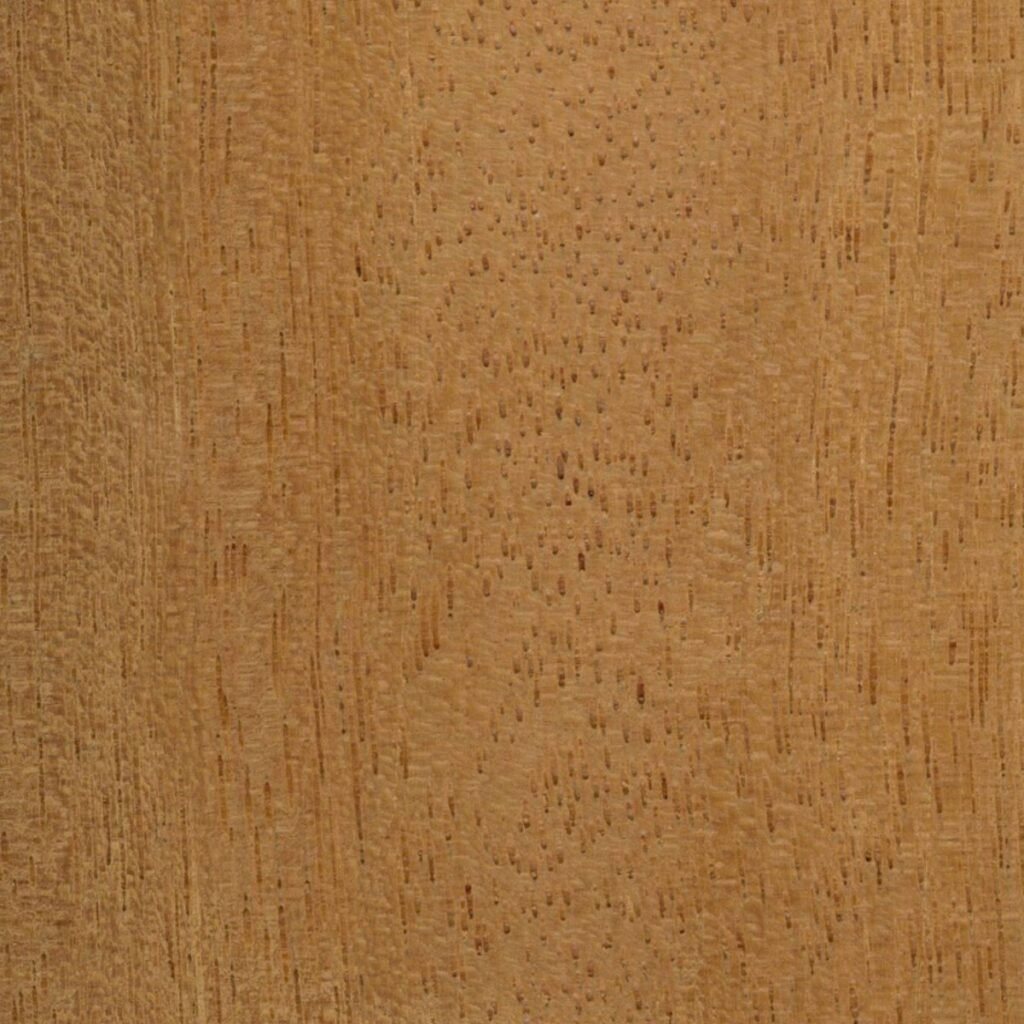
Iroko is one of the most popular cladding hardwoods in Europe. It is very durable, stable, easy to machine and weathers evenly. See iroko vs oak.
Bilinga
Bilinga gives a bright golden facade that weathers to silver. It is very durable and widely used on coastal and public buildings. See our bilinga wood guide.
Okan
Okan is extremely hard and class 1 durable, good for robust facades and areas exposed to impact. It is heavier, so plan fixings accordingly.
Doussie
Doussie is outstandingly stable, ideal for wide boards and precise architectural details. It is CITES listed.
Padouk
Padouk gives a striking red facade if oiled, or a warm grey if left to weather. It is CITES listed.
Movingui
Movingui is golden and stable, suitable for sheltered facades, soffits and covered areas.
Common cladding profiles
- Open-jointed boards: square-edged boards with gaps, fixed over a ventilated cavity with a breather membrane. Very popular in modern design.
- Shiplap: overlapping boards that shed water well.
- Tongue and groove: tight, flush surface; usually laid vertically or diagonally.
- Feather-edge or bevelled: traditional overlapping boards.
- Battens and slats: rectangular or trapezoidal profiles used as screens, brise-soleil and decorative facades.
We machine profiles to your drawings or supply sawn stock for your own machining.
Board sizes
Typical cladding boards are 18–25 mm thick and 70–150 mm wide, in random lengths. Narrower boards move less and are more stable. Wider boards make a bolder statement but need the most stable species, such as doussie. For slatted screens, square or rectangular battens from 20 × 40 mm to 45 × 70 mm are common.
The ventilated cavity: the key to long life
Rainscreen cladding works by letting air flow behind the boards. That flow dries any water that gets through and prevents moisture building up. Good practice includes:
- a cavity of at least 20–25 mm behind the boards;
- vertical battens to allow air to flow from bottom to top;
- insect mesh at the top and bottom openings;
- a breathable membrane on the wall behind;
- a gap between the bottom of the cladding and the ground.
Fixings
Use stainless steel screws or ring-shank nails, A4 grade in coastal areas. Many hardwoods contain tannins that react with plain steel and leave black streaks. Pre-drill dense species, especially near board ends. Use two fixings per board per batten, placed to allow movement. Hidden clip systems are available for a clean look.
Weathering: what to expect
Unfinished hardwood cladding changes colour. In the first months, fresh colours deepen. Then UV light and rain break down the surface lignin, and the facade turns silver-grey. The speed depends on exposure: south and west faces grey first, sheltered areas under eaves stay darker longer. The result can be uneven for a year or two before it evens out. Explain this to clients at the design stage.
Should you finish hardwood cladding?
Most architects let hardwood cladding weather naturally; it is the lowest-maintenance option. If you want to keep the original colour, you must apply a UV-protective oil or stain and maintain it regularly, often every one to three years depending on exposure. Pre-greying treatments can speed up and even out the silver look on new facades.
Fire performance
Building regulations for timber facades vary by country and building height. Dense hardwoods char slowly, but cladding may still need fire-retardant treatment, cavity barriers or specific detailing to meet local rules. Always check requirements with your fire engineer or building control before specifying.
Prices and quantities
Indicative starting prices per m³, FOB Central Africa: okan about $650, bilinga about $700, movingui about $750, iroko about $950, padouk about $1,300, doussie about $1,350. As a rule of thumb, one cubic metre of 20 mm boards covers about 40–45 m² of facade after machining and waste, depending on the profile. See our African hardwood prices guide.
Moisture content
Cladding is exposed to outdoor air, so it should not be dried as much as interior joinery. Boards are usually supplied at around 15–20% moisture content, kiln dried or air dried, to match outdoor equilibrium. Very dry boards can swell and buckle after installation.
Maintenance
Inspect the facade once a year. Remove debris from the cavity openings, check fixings and replace any damaged boards. Clean dirty areas with water and a soft brush. Avoid pressure washers, which damage the surface.
Legality and sustainability
We supply legality and chain-of-custody documents with every shipment and CITES permits for doussie and padouk. These support EUDR, UK Timber Regulation and Lacey Act due diligence, and many public projects require them. Read more on our sustainability page and our guide to EUDR timber compliance.
Common mistakes
- No ventilation behind boards: moisture builds up and boards rot or move.
- Plain steel fixings: they rust and stain.
- Boards too wide for the species: they cup.
- Expecting the fresh colour to last: it greys unless maintained.
- Cladding down to the ground: leave a gap to avoid splash and decay.
Vertical, horizontal or diagonal?
The direction of the boards affects both looks and performance. Horizontal boards are the most common and shed water well when profiled as shiplap or overlapping boards. Vertical boards drain water fastest along the grain and tend to weather more evenly; they need horizontal battens with counter-battens to keep the cavity ventilated. Diagonal boards give a dynamic look but need careful detailing at corners and openings. Whatever the direction, avoid details that trap water on end grain, and keep the bottom of each board clear of horizontal ledges.
Corners, openings and details
Most cladding problems start at the details. At corners, use mitred boards, corner profiles or a set-back detail, and seal end grain before fixing. Around windows and doors, use flashings and drip details so water is thrown clear of the boards. At the base, leave at least 150 mm between the cladding and the ground to avoid splash. Under eaves and soffits, make sure the top of the cavity is ventilated. Good details cost little and add years to a facade.
Hardwood vs softwood vs modified wood cladding
Softwood cladding, such as larch or cedar, is cheaper and lighter, but generally less durable and softer, so it dents and wears faster in public areas. Thermally or chemically modified softwoods improve durability, but they can be brittle and are often more expensive than standard hardwoods. Tropical hardwood cladding combines natural durability with density and stability, and it needs no chemical modification. For high-traffic public buildings, schools and coastal sites, hardwood is often the most robust long-term choice.
Lead times
Kiln or air-dried cladding stock in iroko, bilinga or okan can usually be prepared in 4–6 weeks, with profiled boards taking a little longer. For doussie and padouk, add time for CITES export permits, plus an EU import permit if applicable. For large projects, we can split deliveries to match your construction phases, so boards arrive when the facade team is ready.
Who buys cladding from us?
Our cladding customers include architects and specifiers, facade contractors, house builders, timber merchants and machining companies that profile boards for local projects. Many order rough-sawn kiln-dried stock to machine themselves; others prefer ready profiled boards. We can ship cladding together with decking and joists in one container for projects that use timber inside and out.
How to order cladding
- Send the species, or the project and look you want.
- Give the profile drawing, thickness, width and length range.
- State the area in m² or the volume in m³.
- Give moisture condition and any finishing requirements.
- Give the destination port and schedule.
Our export process page explains each step.
Sources
- Rainscreen on Wikipedia
- CIRAD Tropix for durability data.
Related guides
- Bilinga wood
- Iroko vs oak
- Ipe alternatives
- Best hardwood for decking
- Heavy construction and marine timber
Frequently asked questions about hardwood cladding
What is the best hardwood for cladding?
Iroko and bilinga are popular all-round choices. Doussie is best for wide, stable boards; okan for robust facades.
Does hardwood cladding need treatment?
Very durable species need no preservative. Oil is optional, only to keep the colour.
How long does hardwood cladding last?
Well-detailed cladding in very durable hardwood can last 40 years or more.
Why does cladding turn grey?
UV light and rain break down surface lignin. The wood underneath stays sound.
Get a quote for cladding
Send your species, profile and area through our quote form. We will reply with a firm price, stock photos and lead time.