Bilinga, also known as opepe, is a bright golden-yellow hardwood with an outstanding record in water. Harbour authorities, river engineers, railway companies and landscape contractors use it for piles, jetties, lock gates, sleepers, boardwalks and decks, because it resists decay and marine borers better than most timbers while costing much less than the famous heavy species. For buyers planning marine or outdoor projects, understanding the bilinga wood price helps compare it fairly with azobe, greenheart, oak and treated softwood.
In this guide we give typical FOB prices per cubic metre for the main bilinga products, explain what makes the price go up or down, show how weight and drying affect freight, and look at cost over the life of a structure. Prices are indicative starting points from our own quotes at Global Timber Trade Hub, where we supply bilinga sawn in Cameroon, Gabon and the Republic of Congo.
In short
- Sawn bilinga starts from about $700 per m³ FOB for standard sections.
- Long piles, large beams and kiln-dried decking cost more.
- Bilinga has a strong record in fresh and salt water and in ground contact.
- It is lighter than azobe, which helps freight and handling.
- It is not CITES listed, so paperwork is straightforward.
- Its long life usually makes it cheaper per year than treated softwood.
Typical bilinga prices
| Product | Typical spec | Indicative price (USD, FOB) |
|---|---|---|
| Sawn sections, AD or fresh | Standard boards and beams | from $700 per m³ |
| Marine piles and long beams | 200 × 200 mm+, 6 m+ | from about $850 per m³ |
| Railway sleepers | Standard sleeper sizes | from about $750 per m³ |
| Decking boards, KD | 21–45 mm, profiled | from about $900 per m³ |
| Cladding boards, KD | 18–25 mm, profiled | from about $900 per m³ |
These starting points depend on specification, volume and stock. See our African hardwood prices list for other species.
What is bilinga?
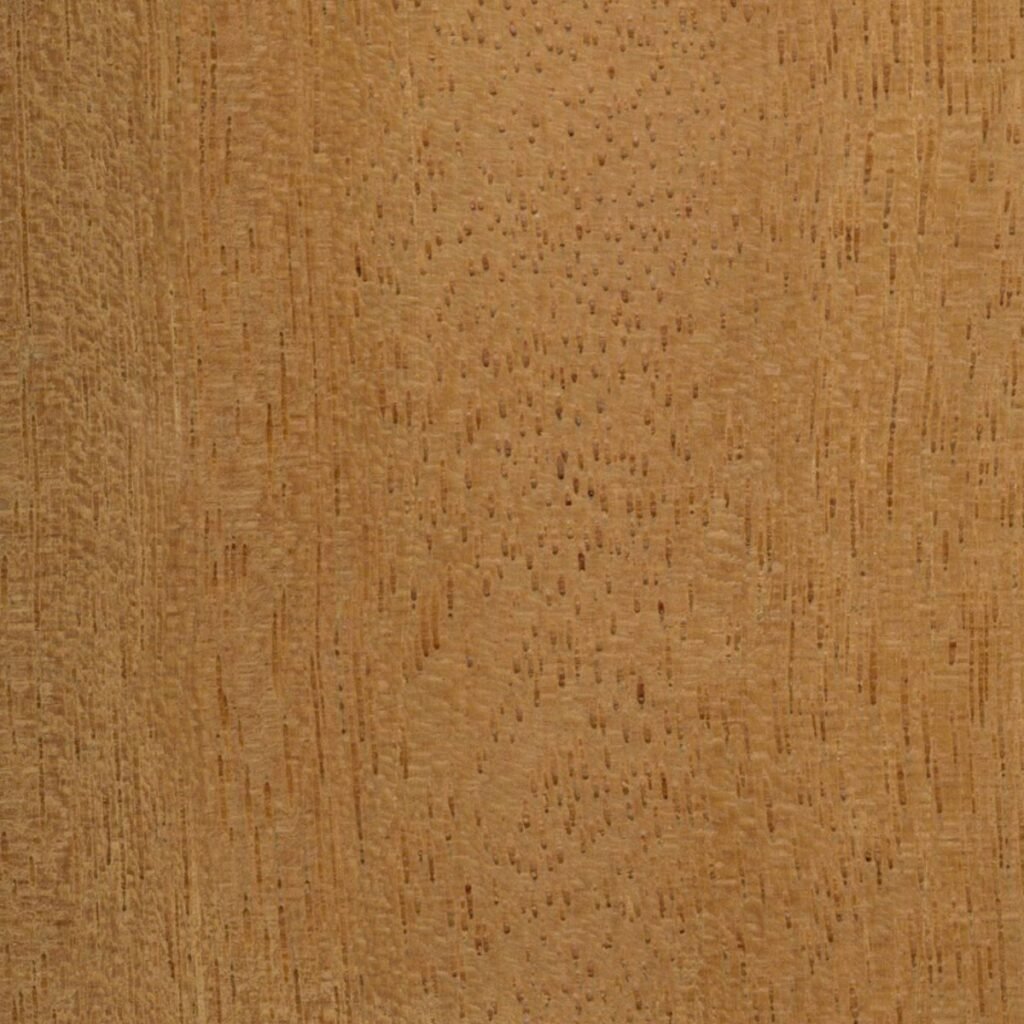
Bilinga (Nauclea diderrichii) is a large tree of West and Central African forests. Its heartwood is a striking golden yellow to orange-brown, darkening slightly with exposure, and it weathers to silver-grey outdoors. The wood is fairly dense, around 750–800 kg per cubic metre when dry, with interlocked grain and a medium to coarse texture. Its heartwood is very durable, resisting fungi, termites and, to a large degree, marine borers. Read our bilinga wood guide for more.
Why bilinga is priced where it is
Bilinga sits just above the dense workhorse species such as tali and okan, and well below premium woods like iroko or doussie. It grows widely and is harvested in good volumes, but logs suitable for long, large marine sections need careful selection, and demand from port and waterway projects in Europe is steady. Its combination of durability in water, moderate weight and reasonable price makes it popular for public works, where budgets are tight but structures must last.
What pushes the price up
The biggest price drivers for bilinga are size and length. Long piles and beams need tall, straight, defect-free logs, which are less common, and they are harder to handle and ship. Tight tolerances for structural grading add selection work. Kiln drying for decking and cladding adds cost and time. Profiling, planing and pre-cutting to project lists also add to the price. If your engineer can accept standard sizes, splices or slightly shorter lengths, the price per cubic metre can come down noticeably.
What brings it down
Ordering standard sections in random lengths, accepting air-dried or fresh-sawn timber for structures that will live outdoors or in water, and buying full containers all lower the cost per cubic metre. Sharing your cutting list early lets mills plan production around your sizes, which avoids rush premiums. For long-term programmes, such as a waterway authority replacing jetties every year, agreeing volumes in advance gives steadier pricing.
Bilinga for marine works
Bilinga has been used for decades in harbour and river works in Europe, especially in the UK, the Netherlands and Belgium, for piles, fenders, jetty decks, walings and lock gate parts. It performs very well in fresh water, and in salt water it resists marine borers better than most timbers, although no wood is fully immune in warm seas with high borer activity. Engineers often choose bilinga where azobe or greenheart would be heavier or more expensive. See our best wood for marine construction guide.
Bilinga for sleepers and landscaping
Bilinga sleepers are used on railways and in landscaping, for garden steps, retaining walls, raised beds and edging. They last much longer in the ground than treated softwood sleepers and need no chemical treatment, which makes them popular with councils and garden designers. Their golden colour fades to grey over time. See our hardwood railway sleepers guide.
Bilinga for decks and cladding
For decks and boardwalks, bilinga gives a bright, durable surface at a reasonable price. For cladding, its golden colour makes striking facades. Bilinga is a little less stable than iroko and can show surface checks as it weathers, so narrower boards, good ventilation and stainless fixings help. See our bilinga vs iroko comparison and hardwood cladding guide.
Weight and freight
Bilinga is lighter than azobe, okan or tali, but still fairly heavy. A 20 ft container typically carries around 20–24 m³ of bilinga before reaching weight limits, depending on moisture content. Fresh-sawn timber weighs more than dried timber, so freight per cubic metre is higher for green sections. Long piles may need flat-rack containers or break-bulk shipping, which changes the freight cost. See timber shipping cost.
Cost over the life of a structure
Price per cubic metre tells only part of the story. A bilinga jetty or boardwalk can last several decades with replacement of worn deck boards, while treated softwood structures in water often need major repairs or replacement much sooner. When you add the cost of closing a footpath or harbour berth, hiring machinery and divers, and disposing of old timber, a longer-lasting species can be far cheaper over the life of the structure. Public bodies increasingly use whole-life costing for this reason.
How bilinga compares on price
| Species | From (USD/m³, FOB) | Main strength |
|---|---|---|
| Tali | $650 | Dense, durable decking and sleepers |
| Azobe | $650 | Strongest, heaviest marine timber |
| Bilinga | $700 | Very durable in water, lighter |
| Iroko | $950 | Stable, refined finish |
A worked example for a boardwalk
Imagine a nature reserve building a 200 metre boardwalk, 1.5 metres wide, over wetland. The deck needs around 300 square metres of 45 mm boards, plus bearers, posts and handrails. In total, the project might use around 25 to 30 cubic metres of bilinga. At typical starting prices, the timber cost FOB is a fraction of the total project budget, which is dominated by labour, foundations and access in a sensitive site. Choosing a species that lasts several decades rather than one or two means the reserve does not have to repeat that disruptive work for a very long time. That is the main reason designers choose bilinga for such projects.
Legal status
Bilinga is not CITES listed. EU buyers must meet due diligence and EU deforestation regulation requirements, and US buyers must comply with the Lacey Act. Many public projects also ask for FSC or PEFC certification. Ask for legal origin documents and certification where needed. See our FSC certified tropical timber guide.
Lead times and payment
Standard sections can usually be cut and loaded in 4–8 weeks. Long piles and project cutting lists may take longer. For first orders, a letter of credit or deposit with balance against copy documents keeps both sides protected. See our letter of credit for timber guide.
Working with bilinga
Bilinga saws and machines fairly well for a dense wood, but it can split when nailed, so pre-drill fixings. Use stainless steel or hot-dip galvanised fixings outdoors. Its dust can irritate, so use extraction. Seal the ends of large sections to reduce end checks while they dry.
Specifying bilinga for tenders
Many bilinga orders come from public tenders, where the specification decides the price as much as the market does. Write the botanical name, Nauclea diderrichii, alongside the trade names bilinga and opepe, so there is no doubt about the species. State the grading rules, the required durability class if your standard uses one, the sizes and tolerances, the moisture content at delivery and any certification requirements. Avoid copying old specifications that call for very long single lengths if splices would be structurally acceptable, because those lengths can be expensive or slow to source. Ask suppliers to confirm availability before the tender closes. A clear, realistic specification attracts more bids, fairer prices and fewer delays once the contract is signed.
If you are not sure which sizes or grades to specify, send us the drawings or the engineer’s schedule and we will suggest what can be supplied most economically from current logs.
Common mistakes
- Specifying lengths that are hard to cut: allow splices where possible.
- Nailing without pre-drilling: bilinga can split.
- Comparing FOB price only: include freight and whole-life cost.
- Using wide boards for cladding: narrower boards check less.
Our honest advice
Bilinga is one of the best-value timbers for structures in water and ground contact. Use it for piles, jetties, sleepers, boardwalks and bright decks, plan sizes around what logs can give, and compare cost over the life of the structure. For refined furniture or very stable cladding, iroko or doussie may suit better.
Sources
Related guides
Frequently asked questions about bilinga wood price
How much does bilinga cost per cubic metre?
Standard sawn bilinga starts from about $700 per m³ FOB; piles and kiln-dried decking cost more.
Is bilinga the same as opepe?
Yes. Bilinga and opepe are trade names for Nauclea diderrichii.
Is bilinga good in salt water?
It resists marine borers better than most timbers, though no wood is fully immune.
Is bilinga cheaper than azobe?
Prices are similar per cubic metre; bilinga is lighter, which can lower freight and handling costs.
Get a bilinga price
Send us your cutting list, volume and destination through our quote form. We will reply with a firm price and lead time.