Ipe has been the benchmark for premium hardwood decking for decades, famous for its extreme hardness and long life. Doussie, also called afzelia, is Africa’s premium answer: very stable, very durable and beautiful underfoot. Architects, deck builders and importers increasingly compare doussie vs ipe, especially since ipe was added to CITES Appendix II and supply became more complicated. The two woods are both excellent, but they behave differently in ways that matter for your project.
In this guide we compare them on hardness, density, stability, durability, appearance, working, finishing, legal rules, supply and price. At Global Timber Trade Hub we supply doussie from Central Africa. We do not sell ipe, which comes from South America, but we have tried to describe it fairly so you can decide.
In short
- Ipe is much harder and heavier; doussie is lighter and easier to work.
- Doussie is one of the most stable hardwoods; ipe can check and move more.
- Both are very durable outdoors and last for decades.
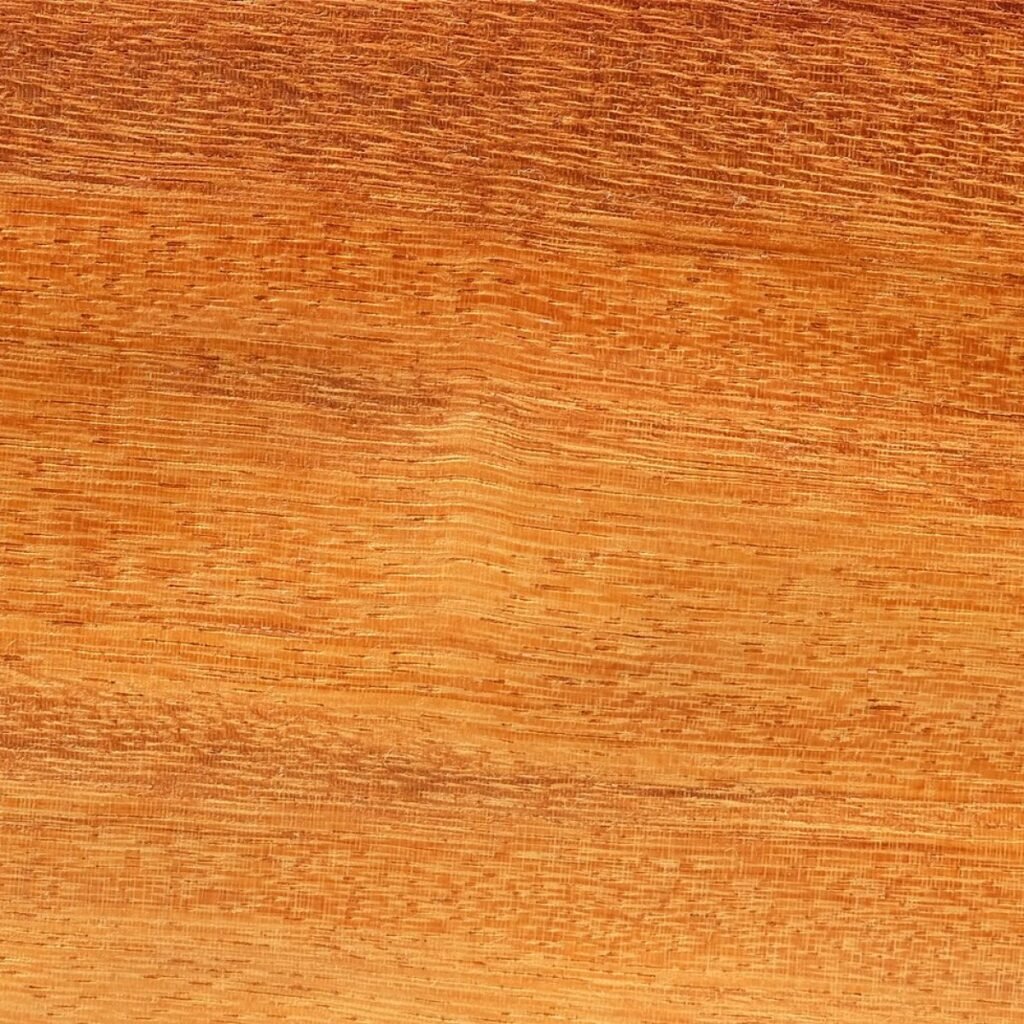
- Doussie has a warm golden to reddish-brown look; ipe is olive to dark brown.
- Both are now CITES Appendix II listed and need export permits.
- Doussie is a strong option for barefoot areas, pool decks and fine joinery.
Quick comparison
| Property | Doussie (afzelia) | Ipe |
|---|---|---|
| Botanical name | Afzelia bipindensis, A. pachyloba | Handroanthus spp. |
| Origin | Central and West Africa | Central and South America |
| Colour | Golden to reddish-brown | Olive-brown to dark brown |
| Density (dry) | about 750–850 kg/m³ | about 1,000–1,100 kg/m³ |
| Janka hardness | about 8,000 N | about 15,000 N |
| Stability | Excellent | Good |
| Durability | Very durable | Very durable |
| Workability | Good with sharp tools | Difficult, very hard on tools |
| CITES | Appendix II (African populations) | Appendix II |
Figures are typical published values and vary with growth and moisture content.
Hardness and density
Ipe is one of the hardest commercial woods in the world, roughly twice as hard as doussie on the Janka scale. That gives it outstanding resistance to wear, dents and heavy foot traffic, which is why it has been used on boardwalks such as public promenades. Doussie is still a hard wood, harder than oak and teak, and easily hard enough for residential and most commercial decks. It is also much lighter, which makes handling, shipping and installation easier.
Stability
This is where doussie shines. It has very low movement between wet and dry conditions, one of the lowest of all commercial hardwoods. Doussie boards stay flat, gaps stay even, and the surface checks very little. Ipe is reasonably stable for such a dense wood, but it can develop surface checks and end splits, especially in wide boards and in hot, dry climates. For wide boards, pool decks and fine outdoor joinery, doussie’s stability is a major advantage.
Durability
Both species are very durable, resisting decay and insects for decades outdoors. Ipe has a long track record in boardwalks and decking around the world. Doussie has a long track record in Europe for decks, windows, doors, boat parts and outdoor furniture. In practice, either wood will outlast most decks’ design life when properly installed with good ventilation.
Appearance
Ipe is olive-brown to dark brown, sometimes with darker streaks, and it gives a deep, uniform dark deck. Doussie is golden to reddish-brown, warmer and lighter, with an attractive, fine grain. Both weather to a silver-grey if not oiled. In hot climates, doussie’s lighter colour stays a little cooler underfoot than dark ipe.
Splinters and barefoot comfort
Doussie has a fine, smooth surface and very few splinters, which makes it a favourite for pool decks, yacht decks and terraces where people walk barefoot. Ipe is also smooth, but its tendency to check can lead to occasional splinters, especially at board ends. See our best wood for pool deck guide.
Working and installation
Ipe is extremely hard on tools. It needs carbide blades, pre-drilling for every screw and often special fixings. It is heavy to carry and can be difficult to glue. Doussie machines well with sharp tooling and still needs pre-drilling, but it is much easier and faster to install. Doussie contains a yellow deposit in some pores that can stain light surfaces at first, so rinse boards before laying near pale stone. Both species benefit from stainless steel fixings.
Dust and health
Ipe dust is a known irritant and can cause respiratory and skin reactions. Doussie dust can also irritate the nose and throat. Use extraction and masks when cutting either wood in quantity.
Finishing
Both woods are oily and dense, so film finishes do not suit them outdoors. A penetrating decking oil once or twice a year keeps the original colour; otherwise let the wood weather to grey. End sealing ipe boards after cutting helps reduce end checks.
CITES and legal rules
Ipe (Handroanthus and related genera) was listed on CITES Appendix II, with the listing taking effect in late 2024. African populations of Afzelia, which includes doussie, are also listed on Appendix II. Commercial exports of both now need CITES export permits, and buyers must keep the paperwork. In the EU, imports must also meet due diligence rules, and in the United States the Lacey Act applies. Plan extra time for permits with either species. Our CITES timber species guide explains the process.
Supply and lead times
Ipe supply has become more uncertain since the CITES listing, with tighter controls in producing countries and shifting prices. Doussie supply is steady but also controlled, with permits issued per shipment. For both, allow extra weeks beyond normal lead times. We usually suggest planning doussie orders 8–12 weeks before you need the wood on site.
Price
Doussie starts from about $1,350 per m³ FOB for sawn stock, with profiled decking costing more. Ipe prices vary with origin, grade and market, and have been volatile in recent years. Because doussie is lighter, more boards fit within a container’s weight limit, which can lower freight cost per square metre. See our hardwood decking cost guide.
Best uses for doussie
- Premium residential decks and terraces.
- Pool and spa decks where people walk barefoot.
- Yacht decks and marine joinery.
- Exterior doors, windows and sills.
- Stair treads, flooring and outdoor furniture.
Best uses for ipe
- Heavily trafficked public boardwalks.
- Commercial decks with very high wear.
- Marine structures where extreme hardness helps.
- Projects where a dark, uniform colour is required.
Other ipe alternatives
If you want ipe-like durability at a lower price, look at dense African species such as tali, okan and azobe, which are not CITES listed. They are heavier and harder than doussie, closer to ipe in feel. Read our full ipe alternatives guide.
Doussie vs ipe for cladding
For rainscreen cladding, stability matters more than hardness. Doussie’s low movement keeps joints tight and boards flat on facades. Ipe is heavy, which adds load to the building and makes fixing harder. For cladding, doussie is generally the more practical choice of the two. See hardwood cladding.
Doussie vs ipe for commercial decks
For restaurant terraces, hotel decks and rooftop bars, both woods work. Doussie gives a warmer look and better comfort for guests; ipe gives the most wear resistance where carts, chairs and heavy traffic are constant. Many designers use doussie in guest areas and denser species on service routes.
Sustainability
Both species grow in natural tropical forests. Ask for documents showing legal harvest and, where possible, FSC certification. CITES permits add another layer of control on harvest levels. Our sustainability page and EUDR timber compliance guide explain what we provide.
Weight and shipping
Weight matters more than many buyers expect. A cubic metre of dry ipe weighs around 1,050 kg, while doussie weighs around 800 kg. A 20 ft container usually reaches its weight limit before it is full of very dense timber, so you ship less ipe per container than doussie. On site, lighter boards mean faster handling, less strain on installers and simpler roof-terrace projects where load limits apply. For rooftop decks and balconies, doussie’s lower weight can be a deciding factor. Our timber shipping cost guide explains how weight affects freight.
Board sizes
Doussie decking is commonly supplied 21–28 mm thick and 90–145 mm wide, in random lengths from about 1.8 m. Thicker boards and wider sizes are possible for terraces and yachts. Because doussie is so stable, wider boards can be used with less risk of cupping than in most species. We can supply smooth, fine-ribbed or grooved profiles, plus matching stair treads, fascia boards and coping.
Common mistakes
- Underestimating installation time with ipe: pre-drilling every fixing takes time.
- Ignoring CITES paperwork: both species need permits.
- Not rinsing doussie near pale stone: the yellow deposit can stain at first.
- No ventilation under decks: even durable woods cup without airflow.
Our honest advice
If you need the toughest possible deck for heavy public traffic, ipe is hard to beat, provided you can source it legally and accept the harder installation. For premium homes, pool decks, yachts and fine outdoor joinery, doussie offers outstanding stability, comfort and beauty with easier working. If budget is the priority, look at tali or okan instead.
Sources
Related guides
- Doussie wood
- Best hardwood for decking
- Padouk vs purpleheart
- Afrormosia vs teak
- Heavy construction and marine timber
Frequently asked questions about doussie vs ipe
Is doussie as durable as ipe?
Both are very durable outdoors; ipe is harder, doussie is more stable.
Is doussie easier to install than ipe?
Yes. It is lighter and much easier on tools, though pre-drilling is still needed.
Are doussie and ipe CITES listed?
Yes. Both are on CITES Appendix II, so exports need permits.
Which is better for a pool deck?
Doussie, thanks to its smooth surface, low splintering and cooler colour.
Get a quote for doussie
Send us your board sizes, profile and area through our quote form. We will reply with a firm price, permit timing and shipping options.