Ask a European window maker which tropical hardwood moves the least, and many will answer without hesitation: doussie. Doussie wood, also sold as afzelia, is famous for its outstanding stability. Combine that with very high durability, an elegant golden-brown colour and good hardness, and you have one of the most versatile premium hardwoods from Africa.
In this guide we explain what doussie is, where it performs best, how to work it, what it costs and what CITES means for your import. We supply doussie from Cameroon and the Congo Basin at Global Timber Trade Hub.
In short
- Doussie (afzelia) is one of the most stable hardwoods in the world.
- It is very durable outdoors and hard-wearing indoors.
- Top uses: windows, doors, flooring, decking, stairs and boat parts.
- African afzelia is CITES Appendix II listed, so exports need a permit.
- Our doussie starts from about $1,350 per m³, FOB Central Africa.
- Yellow mineral deposits in the pores are natural, not a defect.
What is doussie?
Doussie is the trade name for several African Afzelia species, mainly Afzelia bipindensis and Afzelia pachyloba. They grow in Cameroon, Gabon, the Republic of Congo and neighbouring countries. In different markets, the same wood is called afzelia, doussie, apa, lingue or chanfuta.
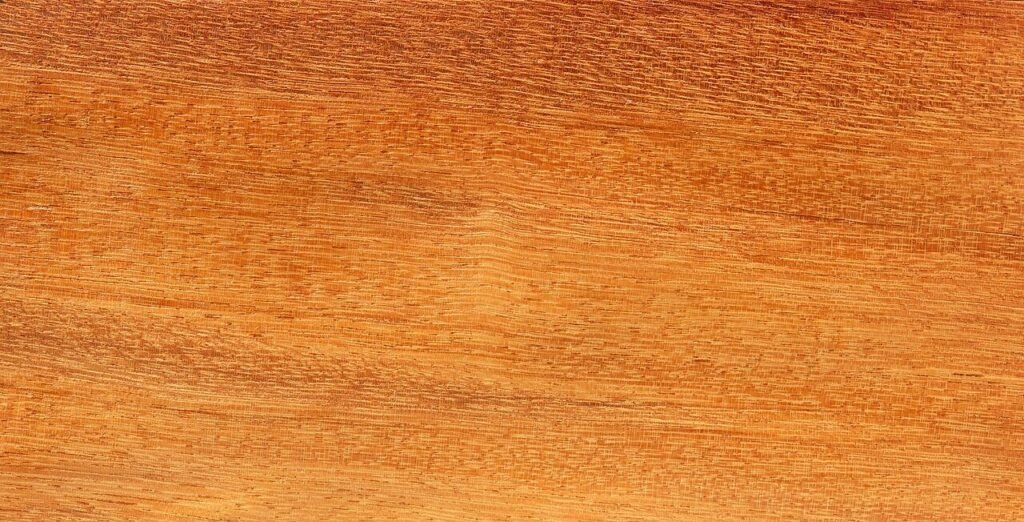
The heartwood is light brown to golden when fresh and darkens to a warm reddish-brown. The grain is often interlocked, with a coarse but even texture.
Doussie wood properties
| Property | Doussie |
|---|---|
| Density at 12% MC | about 750–830 kg/m³ |
| Janka hardness | about 1,810 lbf |
| Natural durability | Very durable |
| Stability | Excellent, very low movement |
| Texture | Coarse but even |
| CITES | Appendix II (African populations) |
Why stability makes doussie special
All wood swells and shrinks with humidity. Doussie does so far less than most hardwoods. In practice, that means:
- windows and doors that stay square and close smoothly for years;
- wide floorboards that stay flat with fewer gaps in winter;
- deck boards around pools that do not cup despite constant wetting and drying;
- stair treads and worktops that keep their shape.
Stability is the main reason doussie commands a premium price.
Best uses for doussie wood
Windows and exterior doors
Doussie is a top-tier window and door timber. It combines durability, stability and a high-quality look. Our guides to the best wood for window frames and best wood for exterior doors compare it with other species.
Flooring
Doussie floors are hard-wearing and very stable, making them suitable for wide boards and underfloor heating with engineered constructions. The colour deepens beautifully with time.
Decking and pool surrounds
Doussie is one of the best woods for decks around swimming pools, where boards get wet and dry many times a day. It stays flat and comfortable underfoot. See our guide to the best hardwood for decking.
Stairs and worktops
Its hardness and stability suit stair treads, handrails, kitchen worktops and bar tops.
Boat building and marine joinery
Doussie is used for decks, trim, cockpit soles and exposed marine joinery where movement must be minimal.
Garden furniture
Very durable and stable, doussie makes long-lasting garden tables, benches and loungers.
Those yellow specks: mineral deposits
Many doussie boards show small yellow or white deposits in the pores. These are natural mineral and organic deposits, not a defect. They are normal for the species and usually disappear visually under oil or lacquer. On light finishes, they can show as fine specks. If your project needs a perfectly uniform surface, tell us and we will select boards with fewer deposits.
Working with doussie
- Machining: doussie is hard and can blunt tools; use carbide. Interlocked grain can tear out on planing.
- Gluing: glues reasonably well; clean surfaces first.
- Fixings: use stainless steel. Like many durable woods, doussie can react with iron in damp conditions.
- Finishing: takes oils and lacquers well. Fill pores for a high-gloss finish.
- Dust: can be irritating to the nose and skin; use good extraction.
CITES rules for doussie
Since 2023, African populations of Afzelia are listed in CITES Appendix II. Every export needs a CITES export permit, and some importing countries, including the EU, also require an import permit. A proposal to remove Central African doussie from the list was discussed at the CITES conference in late 2025 but was not adopted, so the listing still applies.
We arrange the CITES export permit for every doussie shipment and send you a copy before loading. Read more in our guide to CITES timber species.
Doussie wood price
Our doussie starts from about $1,350 per m³ for standard sawn grade, FOB Central Africa. Kiln-dried FAS stock for joinery, wide boards and thick sections cost more. The CITES permit and strong demand from window makers keep doussie in the premium range. See the full table in our African hardwood prices guide.
Sizes and product forms
- sawn boards 27–100 mm thick, random widths and lengths;
- kiln-dried joinery stock for windows and doors;
- decking profiles and flooring strips;
- laminated scantlings for window frames, on request;
- stair treads and worktop blanks.
Doussie vs other premium woods
| Species | Stability | Durability | CITES | Price level |
|---|---|---|---|---|
| Doussie | Excellent | Very durable | Appendix II | High |
| Iroko | Good | Very durable | Not listed | Medium |
| Sipo | Good | Moderately durable | Not listed | Medium |
| Padouk | Very good | Very durable | Appendix II | High |
| Afrormosia | Very good | Very durable | Appendix II | High |
If you want to avoid CITES paperwork, Iroko and Sipo are the most common alternatives. See our Sipo wood guide.
How to order doussie
- Tell us the use: windows, doors, flooring, decking or furniture.
- Give thicknesses, widths and length range.
- State grade and moisture content.
- Mention if you need boards with few mineral deposits.
- Give volume and destination port, and whether you need an import permit.
Doussie for window makers: practical tips
Window makers often use laminated scantlings, made of three glued layers, to get straight, stable profiles. Doussie is well suited to lamination. For best results, order kiln-dried stock at 12–14% moisture content, let it acclimatise and machine it with sharp carbide tooling. Use a microporous coating system designed for hardwood windows and seal the end grain well.
Maintenance
Indoors, doussie needs very little care. Outdoors, it can be left to weather to grey or oiled once or twice a year to keep its colour. Windows and doors need the usual coating maintenance, but doussie’s stability helps coatings last longer than on less stable woods.
How doussie ages
Fresh doussie is light golden brown. Within months, it darkens to a richer reddish-brown, especially in sunlight. Many clients choose it precisely for this warm, mature colour. Outdoors, unfinished doussie turns silver-grey over time.
Doussie in luxury interiors
Interior designers use doussie for stairs, floors and wall panelling in hotels, villas and offices. Its warm colour, even texture and stability work well in large, open spaces with big windows, where temperature and humidity change through the day. Wide doussie boards, sometimes 200 mm or more, give a calm, generous look that narrower strips cannot match. Because doussie moves so little, wide boards stay flat when other species might cup.
Quality checks before loading
Before any doussie leaves our yard, we measure moisture on a sample of boards, check dimensions against your list and inspect faces for splits and sapwood. We photograph bundles and send you a packing list with the volume of each bundle. Because doussie is a CITES species, we also check that the species name, volume and product on the permit match the invoice exactly.
Doussie for pool decks: a closer look
A pool deck is one of the toughest places for timber. Boards are splashed with chlorinated or salt water, dry in strong sun, then get wet again, sometimes many times a day. Bare feet demand a smooth, splinter-free surface. Doussie handles this better than most species because it moves so little and resists decay. For pool surrounds, we recommend smooth boards with eased edges, 21–28 mm thick, laid with 5–6 mm gaps and fixed with A4 stainless steel screws or hidden clips. Rinse the deck with fresh water from time to time and oil it once or twice a year if you want to keep the warm colour.
How doussie compares with ipe
Many buyers come to doussie while looking for an alternative to ipe. Ipe is harder and heavier, but doussie is more stable and much easier to machine. Doussie also has a warmer, more refined look for interiors. Since ipe was added to CITES Appendix II, both species need permits, so paperwork is no longer a reason to choose one over the other. For a full comparison of options, read our guide to ipe alternatives.
Lead times and planning
Standard sawn doussie can often be prepared in a few weeks. Kiln-dried joinery stock and decking profiles usually take 4–8 weeks before loading. Add one to four weeks for the CITES export permit, which we start as soon as the order is confirmed, and the sea transit to your port. For window and door makers who need a steady supply, we can set up regular shipments every month or quarter, so your production never waits for timber.
Who buys doussie from us?
Our doussie customers include window and door manufacturers in Europe, flooring producers, stair makers, landscape contractors building premium decks, boat yards and furniture workshops. Most order kiln-dried stock in standard thicknesses, often mixed with Sipo or Iroko in the same container to cover different product lines.
Sources
- Afzelia on Wikipedia
- CITES Checklist
- CIRAD Tropix for technical data.
Related guides
- Best wood for window frames
- Best hardwood for decking
- CITES timber species
- Ipe alternatives
- Furniture and joinery hardwoods
Frequently asked questions about doussie wood
Is doussie the same as afzelia?
Yes. Doussie is a common trade name for African Afzelia species.
Is doussie good for decking?
Yes. It is very durable and extremely stable, which makes it ideal for decks and pool surrounds.
Do I need a CITES permit for doussie?
Yes. African afzelia is CITES Appendix II listed, so exports need a permit. We arrange it for you.
How much does doussie cost?
Our doussie starts from about $1,350 per m³, FOB Central Africa. Kiln-dried joinery stock costs more.
Get a quote for doussie
Send your use, sizes and volume through our quote form. We will reply with a firm price, photos of current stock, lead time and the CITES documents for your shipment.