Mahogany is one of the most recognisable names in fine woodworking, and African mahogany, or Khaya, is the mahogany most buyers can actually source in volume today. If you are budgeting for furniture, doors, boat interiors or guitars, you need a realistic african mahogany price. Since 2023, that price also includes the time and cost of CITES permits, which many buyers forget to plan for.
In this guide we explain how African mahogany is priced, what CITES adds, how much fits in a container, how it compares with sapele and sipo on cost, and how to buy it efficiently. We supply African mahogany from Central Africa at Global Timber Trade Hub, always with CITES documents.
In short
- Our African mahogany starts from about $950 per m³ for standard sawn grade, FOB Central Africa.
- Kiln-dried FAS stock, wide boards and instrument blanks cost more.
- Khaya is CITES Appendix II listed, so every export needs a permit.
- A 40ft container usually carries about 42–48 m³, because Khaya is fairly light.
- Sapele and sipo are non-listed alternatives at a similar or lower price.
- Genuine Swietenia mahogany, where available, is usually far more expensive.
How African mahogany is priced
African mahogany is sold per cubic metre, usually FOB a Central African port. One cubic metre equals about 424 board feet, so $950 per m³ is about $2.24 per board foot before freight and duties. Instrument blanks and selected figured boards are usually priced per piece.
African mahogany price at a glance
| Product | Indicative level (FOB) | Typical use |
|---|---|---|
| Standard sawn boards | from about $950 per m³ | Furniture parts, joinery |
| Kiln-dried FAS | higher | Fine furniture, doors, boat interiors |
| Wide boards and thick stock | higher | Tabletops, carving, stair parts |
| Quartersawn neck stock | per piece or per m³ | Guitar necks |
| Body and back-and-side sets | per piece | Guitars |
| Figured boards | per piece | Feature furniture |
See the African mahogany product page and our full African hardwood prices list.
What CITES adds to the price
Since February 2023, African populations of Khaya are listed in CITES Appendix II. Every export needs a CITES export permit, and in the EU and some other markets the buyer also needs an import permit. Permits involve fees, paperwork and quotas, and they add one to four weeks to the export timeline. This is a real part of the African mahogany price, and it is the main reason some buyers switch to non-listed alternatives. Read our guide to CITES timber species.
Other factors that change the price
Grade
FAS boards cost more than common grades. For guitar factories and furniture makers cutting short parts, lower grades can be much more economical.
Drying
Kiln drying to 8–12% for furniture or 6–8% for instruments adds cost but is essential to avoid movement. See kiln dried vs air dried lumber.
Selection
Quartersawn stock, colour matching and weight sorting for instruments take extra time and add cost.
Volume
Full containers and regular orders get better pricing per cubic metre.
Container loads and freight
Kiln-dried African mahogany weighs roughly 500–560 kg/m³, lighter than many hardwoods. A 40ft container usually carries about 42–48 m³, which keeps freight per cubic metre relatively low. See how much timber fits in a 40ft container.
African mahogany vs alternatives on price
| Species | From (USD/m³, FOB) | CITES | Notes |
|---|---|---|---|
| Kossipo | $750 | Not listed | Economical, coarser |
| Sapele | $850 | Not listed | Harder, ribbon figure |
| Sipo | $900 | Not listed | Stable, calm grain |
| African mahogany | $950 | Appendix II | Classic mahogany look and feel |
| Genuine mahogany (Swietenia) | Much higher | Appendix II | Scarce in volume |
Compare in sapele vs mahogany and African mahogany vs genuine mahogany.
African mahogany price for guitar makers
Guitar factories usually buy kiln-dried FAS or selected boards by the container and cut their own neck and body blanks. Small workshops prefer pre-cut, graded blanks. Per piece, pre-cut blanks cost more, but they save you waste and machine time. Because mahogany is CITES listed, check whether you need a permit for raw blanks in your country. See African tonewood for guitars.
African mahogany price for furniture and doors
Furniture makers usually buy kiln-dried FAS for visible parts and lower grades for hidden parts. Door makers often use laminated stock. If CITES timelines are a problem, sipo or sapele can replace mahogany under the same stain for most painted and stained products.
A worked example
A boat yard orders 15 m³ of kiln-dried FAS African mahogany for interior joinery and brightwork, plus 20 m³ of sapele for structural interior parts and 5 m³ of okoume lumber. All three fit in one 40ft container. We apply for the CITES export permit for the mahogany as soon as the order is confirmed and send the yard a copy, so it can request its EU import permit in parallel. The timber and the documents arrive together.
How to compare African mahogany quotes
- Is it Khaya, and which species? Ask for the scientific name.
- Is the CITES export permit included?
- What grade, moisture content and sizes?
- Which Incoterm and port?
- What is the total timeline, including permits?
Be cautious of any “African mahogany” offer that does not mention CITES. Some sellers also label sapele, sipo or other species as mahogany; that is fine if it is clear, but you should know what you are paying for.
Ways to lower your mahogany cost
- Use mahogany only where it shows; use sapele or sipo for hidden parts.
- Accept random lengths and widths.
- Use lower grades for short components.
- Combine species in one container.
- Order once or twice a year, with permits planned in advance.
Quality to expect for the price
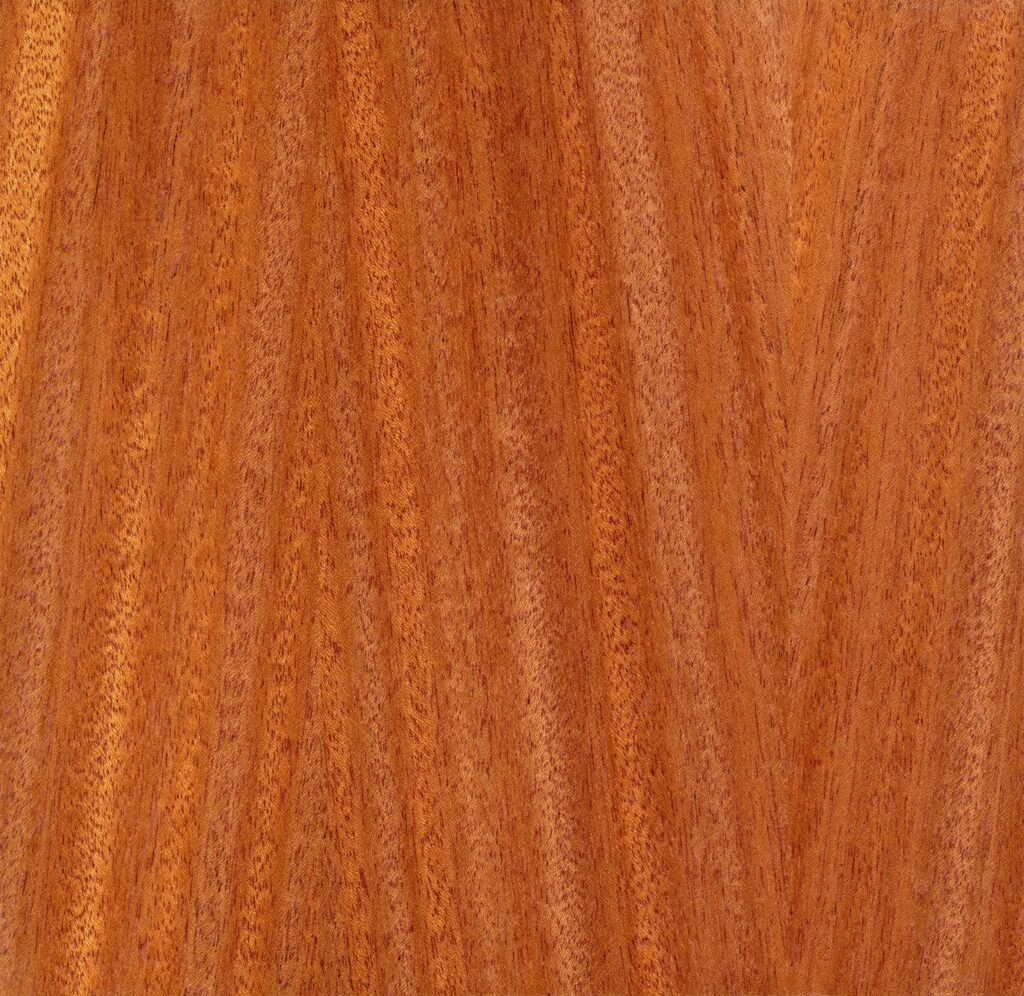
At FAS kiln dried, expect long, wide, mostly clear boards with a pinkish to reddish-brown colour that darkens with time, and some interlocked grain that can give a mild stripe. Pin holes, sapwood and splits should be within the grade rules. We photograph bundles and measure moisture before loading.
Lead times
Standard sawn stock can often be prepared in a few weeks. Kiln-dried FAS takes 4–8 weeks before loading. Add one to four weeks for the CITES export permit, plus sea transit. In the EU, apply for your import permit as soon as you receive the copy of the export permit.
How prices are moving
Since the CITES listing, African mahogany volumes are more tightly controlled, and prices have firmed. At the same time, demand for non-listed alternatives such as sapele and sipo has grown. We expect documented, kiln-dried African mahogany to stay in a premium position, especially for instruments and boat work.
Documents included
Every African mahogany shipment includes the CITES export permit, commercial invoice, packing list, bill of lading, certificate of origin, phytosanitary certificate and legality and chain-of-custody documents. For EU buyers, we also provide information for EUDR due diligence. See EUDR timber compliance.
Who buys African mahogany from us?
Our customers include guitar factories and luthiers, boat yards, furniture makers, door manufacturers and restoration workshops. Many combine mahogany with sapele, sipo or okoume in one container to cover different parts of their production.
From FOB to landed cost
To see what African mahogany really costs at your door, add sea freight and insurance if you buy FOB, import duties and VAT or sales tax, customs broker and port fees, any import permit fees in your country, and inland transport. Divide the total by the volume to get the landed cost per cubic metre. Because mahogany is relatively light, more cubic metres fit in a container, which keeps the freight share lower than for dense species. Our guide to timber shipping cost explains how freight is calculated.
Mahogany price by end use
- Guitar necks and bodies: kiln dried to 6–8%, quartersawn for necks; priced per piece or per m³.
- Fine furniture: kiln-dried FAS for visible parts, lower grades for frames.
- Boat interiors and brightwork: selected straight-grained FAS.
- Doors and joinery: FAS or laminated stock; consider sipo if timelines are tight.
- Carving and restoration: thick, clear stock priced by size.
Our honest advice
If the mahogany name matters to your customers, for example for guitars or classic boats, African mahogany is worth its price and paperwork. If what matters is the warm reddish look under a stain or paint, sipo or sapele will do the job for less and with no permits. Many of our clients use both: mahogany where the name and feel count, alternatives everywhere else.
Small orders and samples
Workshops that need only a few cubic metres can join a mixed container or order selected blanks. Because each CITES shipment carries fixed paperwork costs, ordering once a year in a larger quantity is usually more economical than many small orders.
Storing mahogany after delivery
Keep kiln-dried mahogany indoors, stacked flat with stickers, away from heaters and direct sunlight. Let it acclimatise in your workshop before machining. Mahogany is stable once dry, but rushing this step can still cause small movement, especially in thin instrument parts. Proper storage protects the value you paid for.
Common mistakes
- Forgetting the import permit: in the EU, timber can be held until you have it.
- Using mahogany for hidden parts: cheaper species work there.
- Buying “mahogany” without a scientific name: always confirm the species.
- Using wet stock for instruments: insist on low, measured moisture content.
Sources
Related guides
- African mahogany vs genuine mahogany
- Sapele vs mahogany
- African tonewood for guitars
- Sapele wood price
- Furniture and joinery hardwoods
Frequently asked questions about african mahogany price
How much does African mahogany cost per m³?
Our African mahogany starts from about $950 per m³ for standard sawn grade, FOB Central Africa.
Is African mahogany cheaper than genuine mahogany?
Yes, usually by a wide margin, and it is far easier to source in volume.
Does African mahogany need a CITES permit?
Yes. African Khaya has been CITES Appendix II listed since 2023.
What is a cheaper alternative to African mahogany?
Sapele and sipo are non-listed alternatives with a similar look; kossipo is cheaper still.
Get a firm African mahogany price
Send your use, grade, sizes and volume through our quote form. We will reply with a firm price, permit timeline and stock photos.