Few woods catch the eye like zebrawood. Its bold dark stripes on a pale gold background make instant statement pieces: guitar tops, knife scales, boxes, accent furniture, cabinet doors and luxury veneers. Because it is an exotic species with limited supply, it sits well above everyday hardwoods on price. Designers, instrument makers, furniture factories and exotic wood dealers often ask us about the zebrawood price, how it is calculated and how to make sure they get good stripes for their money.
In this guide we cover typical FOB prices per cubic metre and per board foot, the premium for quarter-sawn stock, how size and grade affect cost, how to plan freight and how to avoid common buying mistakes. Prices are indicative starting points from our own quotes at Global Timber Trade Hub, where we supply zebrawood sawn in Gabon and Cameroon.
In short
- Kiln-dried sawn zebrawood starts from about $2,200 per m³ FOB.
- That is roughly $5.20 per board foot FOB before freight and margins.
- Quarter-sawn boards with straight stripes command a premium.
- Wide, long, clear boards are scarce and priced higher.
- Zebrawood is not CITES listed but supply is limited and regulated.
- Most buyers combine it with other species to fill a container.
Typical zebrawood prices
| Product | Typical spec | Indicative price (USD, FOB) |
|---|---|---|
| Sawn boards, KD | FAS, 27–52 mm, random widths and lengths | from $2,200 per m³ |
| Quarter-sawn boards | Straight stripe, KD | from about $2,600 per m³ |
| Wide and long boards | 200 mm+ wide, 2.5 m+ long | from about $2,700 per m³ |
| Thick stock and squares | 65 mm+, turning and handle squares | from about $2,500 per m³ |
| Shorts | Short lengths for small items | below standard board price |
These are starting points. Prices change with stock, specification, volume and season. See the full list in our African hardwood prices guide.
Converting to board feet
Buyers in North America usually price exotic wood in board feet. One cubic metre equals about 424 board feet. At $2,200 per m³ FOB, that works out at roughly $5.20 per board foot before freight, duties, handling and the dealer’s margin. Quarter-sawn stock at around $2,600 per m³ is about $6.10 per board foot FOB. Retail prices in exotic wood shops are naturally higher, because they include import costs, small-quantity handling and stock holding.
What is zebrawood?
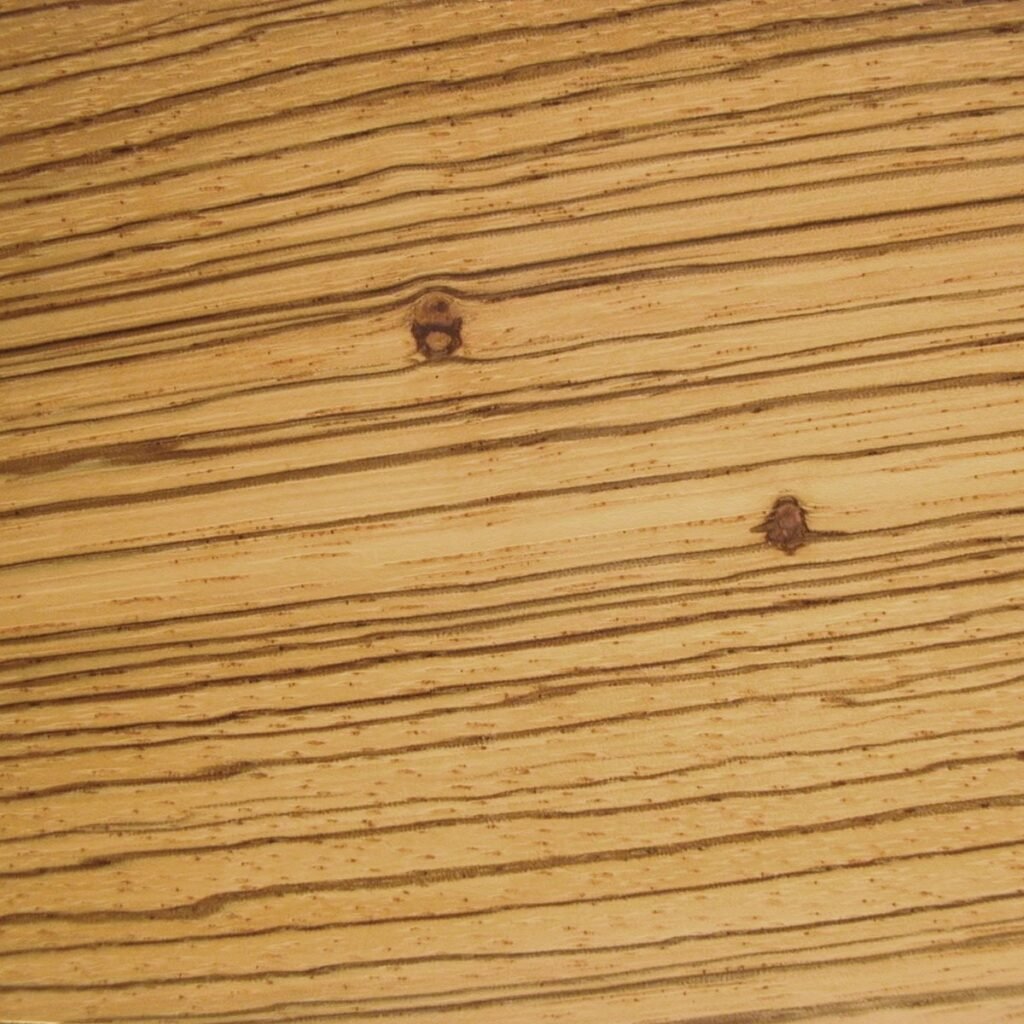
Zebrawood, also called zebrano, comes mainly from Microberlinia brazzavillensis and the closely related Microberlinia bisulcata, large trees of the coastal forests of Gabon, Cameroon and the Republic of Congo. The heartwood is light golden brown with sharp, dark brown to black streaks. The pattern depends on how the board is cut: quarter-sawn boards show straight, parallel stripes, while flat-sawn boards show wavy, irregular patterns. Read our zebrawood lumber guide for more on the species.
Why zebrawood is expensive
Zebrawood trees grow in limited areas and are harvested in small numbers. Logs often have defects, and the sapwood must be cut away, so yield of good striped heartwood is low. The wood has interlocked grain and can be difficult to dry without checking, which adds kiln time and losses. Demand is strong from instrument makers, furniture designers and veneer mills, and much of the best log material goes to veneer, where one log can face many square metres of panels. Together, these factors keep solid zebrawood prices high.
The quarter-sawn premium
For many uses, the straight, regular stripes of quarter-sawn zebrawood are what buyers want, especially for guitar tops and bodies, cabinet doors and modern furniture. Quarter-sawing produces fewer boards per log and more waste, so these boards cost more. Flat-sawn boards are cheaper and show dramatic wavy figures that suit boxes, bowls and some artistic pieces. Decide which look you need before ordering, because mixing the two in one project can look inconsistent.
Grade, size and yield
FAS boards with long, clear cuttings are the most expensive. Lower grades, with small knots, checks or shorter lengths, cost less and suit small items such as knife scales, pen blanks and box parts. Wide boards over 200 mm and long lengths are hard to find and cost more. If you make small items, shorts and narrow boards give much better value than wide FAS stock. See our hardwood lumber grades guide.
Drying and stability
Zebrawood is prone to movement and checking if dried too quickly. Good kiln-dried stock at 8–12% moisture content costs more but saves losses later. Even when dry, zebrawood moves more than very stable species, so it is often used as veneer on stable substrates for large panels, or in narrower solid parts. Let boards acclimatise in your workshop before machining.
Zebrawood for veneer vs solid
Much commercial zebrawood is sold as veneer, which spreads the cost of a beautiful log over a large area and avoids stability problems in big panels. Solid zebrawood is preferred for instruments, knife scales, turnings, small furniture and accent pieces where thickness matters. If you are panelling walls or making large cabinet doors, compare the cost of veneered panels with solid boards. See African hardwood veneer.
How zebrawood compares on price
| Species | From (USD/m³, FOB) | Main appeal |
|---|---|---|
| Padouk | $1,300 | Vivid orange-red |
| Wenge | $1,600 | Dark, near black |
| Zebrawood | $2,200 | Bold stripes |
| Bubinga | $2,400 | Pink-red, figured |
| African ebony | $9,500 | Jet black, very fine |
Many exotic dealers buy several of these species in one shipment to offer a full range. Browse our exotic decorative hardwoods.
Freight and landed cost
Our prices are FOB at a Central African port. Add sea freight, insurance, destination charges, customs clearance, duties and inland delivery. Because zebrawood is high in value per cubic metre, freight is a smaller share of the landed cost than for cheap species, often 10–20%. Few buyers need a full container of zebrawood alone, so most combine it with other exotic or commercial species in a mixed load. See our timber shipping cost guide.
Legal status
Zebrawood is not CITES listed at the time of writing. Microberlinia species are of conservation concern and harvest is regulated in producing countries. Buyers in the EU must meet due diligence requirements, and US buyers must file a Lacey Act declaration with the correct botanical name. Ask for full legal origin documents. See our Lacey Act timber imports guide.
Working costs
Zebrawood machines reasonably well, but its interlocked grain can tear out on planers, so sharp cutters and light passes help. It has a noticeable smell when freshly cut, and its dust can irritate, so extraction is important. Its open pores benefit from grain filling for a glass-smooth finish. These are normal for exotic hardwoods, but they add workshop time and should be included in your project costing.
Best uses that justify the price
- Guitar and bass tops, bodies and fretboards.
- Knife scales, pens and small turned items.
- Jewellery boxes, humidors and gift items.
- Accent furniture, drawer fronts and inlays.
- Veneered panels for yachts, hotels and offices.
How to buy zebrawood well
- Ask for photos of the actual boards, not stock images.
- Specify quarter-sawn or flat-sawn clearly.
- Order shorts or narrow boards for small items.
- Check moisture content on arrival.
- Combine with other species to fill a container.
How the stripes affect value
Not all zebrawood looks the same, and the figure has a big effect on what a board is worth to you. The most prized boards have high contrast, with very dark, narrow stripes on a bright golden background, and stripes that run straight and evenly along the length. Boards with low contrast, muddy colour, wide pale areas or wandering stripes are less valuable for showpiece work, though they are perfectly good for smaller items or parts that will be partly hidden. Colour also changes with time: the pale background slowly darkens toward a deeper gold, while the stripes stay dark, so contrast softens a little over the years. When you order, tell us what the wood is for and what kind of figure you want, and ask for photos of the parcel. Matching expectations before shipment avoids disappointment and disputes.
Buying for a production run
If you make zebrawood items in volume, such as guitar bodies or knife scales, consistency matters as much as beauty. Order enough for the whole run from one parcel, sort boards by figure and colour on arrival, and set aside the best boards for your premium lines. Keeping a small stock of dry boards in your workshop smooths out supply gaps, which are common with exotic species. Our best wood for woodturning guide has tips on blank sizes.
Lead times and payment
Kiln-dried zebrawood is usually ready to load in 6–10 weeks, depending on stock and the cut you need. For first orders, a deposit with the balance against copy documents, or a letter of credit, keeps both sides protected. See our letter of credit for timber guide for details on how this works.
Common mistakes
- Paying for wide FAS boards for small items: shorts give better value.
- Mixing quarter-sawn and flat-sawn in one piece: the stripes clash.
- Using solid zebrawood for wide panels: veneer is more stable.
- Skipping botanical names on documents: they matter for customs.
Our honest advice
Zebrawood is a showpiece wood, and its price reflects limited supply and strong demand. Buy the cut and size you actually need, ask for photos of the real parcel, and combine it with other species to keep freight efficient. For large panels, consider veneer; for instruments, handles and accents, solid quarter-sawn boards are worth the premium.
Sources
Related guides
- African tonewood for guitars
- Best wood for knife handles
- Bubinga wood price
- Wenge wood price
- Buy zebrawood
Frequently asked questions about zebrawood price
How much does zebrawood cost per cubic metre?
Kiln-dried sawn zebrawood starts from about $2,200 per m³ FOB.
What is the zebrawood price per board foot?
About $5.20 per board foot FOB at that level, before freight and dealer margins.
Why is quarter-sawn zebrawood more expensive?
Quarter-sawing gives fewer boards per log and shows the straight stripes buyers prefer.
Is zebrawood CITES listed?
No, not at the time of writing, but harvest is regulated in producing countries.
Get a zebrawood price
Send us your sizes, cut, volume and destination through our quote form. We will reply with a firm price and current availability.