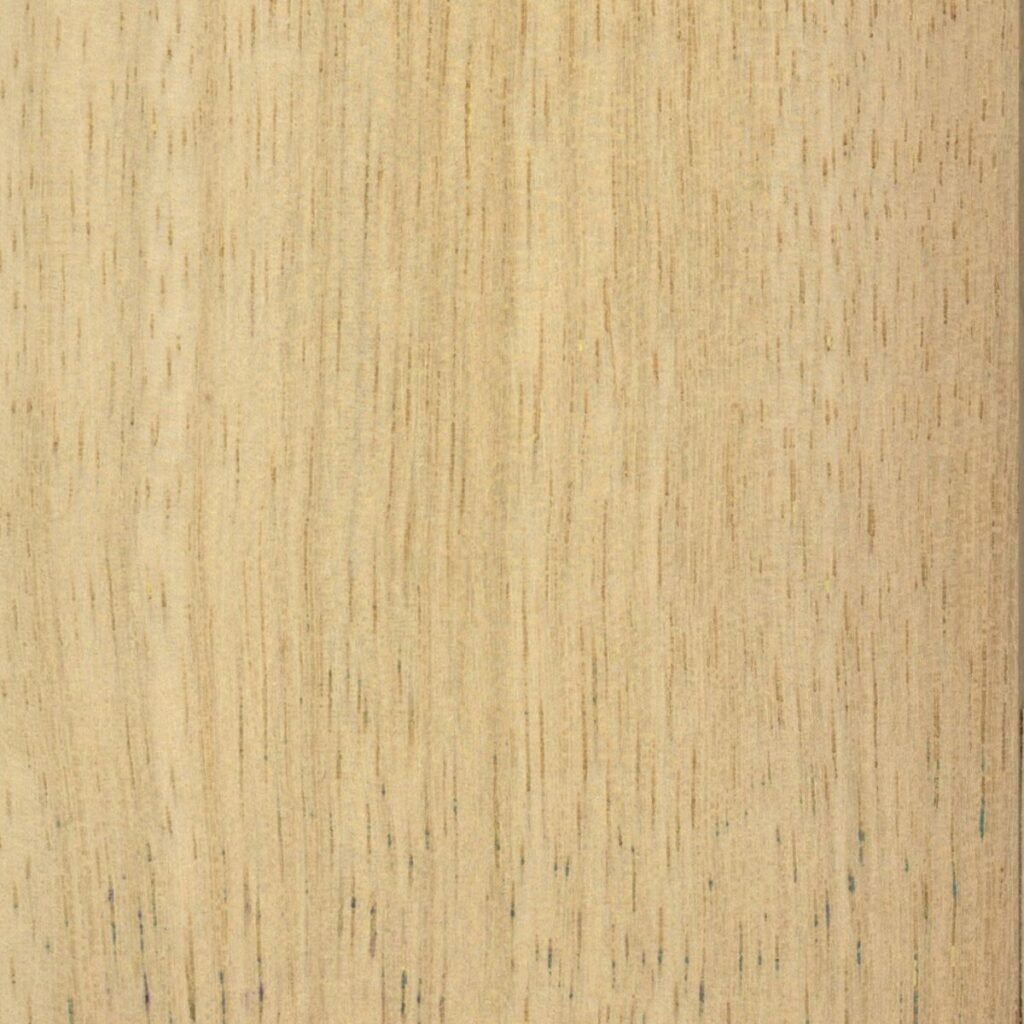
Movingui is the sunny one among African hardwoods. Its bright golden-yellow colour, natural lustre and fine, even grain make floors, stairs, furniture and panelling glow, and it brings a light, cheerful look that darker tropical woods cannot match. Interior designers use it for bright modern interiors, flooring companies offer it as a golden alternative to oak, and joiners appreciate its stability and workability. If you want a light-toned hardwood with more warmth and character than ash or maple, movingui wood deserves a close look.
In this guide we cover movingui’s properties, appearance, best uses, how it compares with oak, iroko and other light woods, typical prices, working and finishing tips, and what to check when you order. At Global Timber Trade Hub we supply movingui sawn in Cameroon, Gabon and the Republic of Congo.
In short
- Movingui is a bright golden-yellow hardwood with a natural shine.
- It is medium-hard, stable and works well with sharp tools.
- Kiln-dried boards start from about $750 per m³ FOB.
- It suits flooring, stairs, furniture, panelling and interior joinery.
- It is moderately durable outdoors; best used inside or well protected.
- Its colour mellows to a deeper gold over time.
What is movingui?
Movingui (Distemonanthus benthamianus), also called ayan in Nigeria and Ghana and Nigerian satinwood in some older literature, is a medium to large tree of West and Central African forests. Its heartwood is lemon yellow to golden brown, often with darker streaks, and it has a satin-like lustre. The grain is interlocked or wavy, sometimes giving an attractive ribbon or mottled figure. The texture is fine to medium. Density is around 650–750 kg per cubic metre when dry, similar to European oak.
Key properties
| Property | Movingui |
|---|---|
| Botanical name | Distemonanthus benthamianus |
| Other names | Ayan, Nigerian satinwood |
| Colour | Lemon yellow to golden brown |
| Density (dry) | about 650–750 kg/m³ |
| Stability | Good |
| Durability | Moderate |
| From (USD/m³, FOB) | $750 |
Why designers choose movingui
Most tropical hardwoods are red, brown or dark. Movingui is one of the few that gives a bright, light interior, which suits Scandinavian, modern and coastal styles. Its golden colour is warmer than ash, maple or beech, and its lustre makes it look rich even under a simple oil finish. It is hard enough for floors and stair treads in homes and offices, and stable enough for wide boards and furniture. For designers tired of grey oak, movingui offers something different without becoming exotic or loud.
Best uses for movingui
- Solid and engineered flooring.
- Stair treads, risers and handrails.
- Furniture, tables and cabinets.
- Wall panelling and ceilings.
- Interior doors and joinery.
- Shopfitting and office interiors.
- Veneer for decorative panels.
Movingui for flooring
Movingui is a popular flooring wood in Europe, especially in France and Belgium. Its hardness is close to oak, so it wears well in homes and light commercial spaces, and its stability helps boards stay flat. The golden colour brightens rooms with little natural light. Because it darkens slowly to a deeper gold, rugs and furniture can leave lighter areas at first, so it helps to move them occasionally in the first year. See our tropical hardwood flooring guide.
Movingui for stairs and furniture
For stairs, movingui makes bright, hard-wearing treads that pair well with white risers or glass balustrades. For furniture, it gives a warm, golden look that suits modern designs, and its fine texture finishes smoothly. See our best wood for stairs and best wood for a dining table guides.
Movingui vs oak
Oak is the most common flooring wood in Europe. Movingui has similar hardness, a finer texture, more lustre and a more golden colour. It is usually more stable than flat-sawn oak and comes in clean, knot-free boards. Oak has more visible grain and is more durable outdoors. Many buyers choose movingui when they want a light floor with a smoother, brighter look than oak. Prices are often competitive with good-quality oak, especially for wide, clear boards. See sapele vs oak for how oak compares with African woods.
Movingui vs iroko
Iroko is golden brown and much more durable outdoors; movingui is brighter yellow and better suited to interiors. Iroko darkens quickly to brown, while movingui stays golden for longer. For outdoor furniture or cladding, choose iroko; for bright floors and interiors, movingui. See our iroko wood price guide.
Working properties
Movingui works fairly well with sharp tools. Its interlocked grain can tear out when planing, so use low cutting angles and light passes. It contains some silica, so carbide tooling is recommended in production. It glues and screws well. It can bleed a yellow dye when wet, which may stain light materials such as plaster or textiles during building work, so keep it dry and finish it before it comes into contact with pale surfaces. Dust can irritate some people, so use extraction.
Drying and stability
Movingui dries fairly well, though care is needed to avoid distortion in wide boards. Once dry, it is stable. Order kiln-dried stock at 8–12% for flooring and furniture, and let it acclimatise in the room before installing floors. See kiln dried vs air dried lumber.
Finishing
A clear oil or water-based lacquer keeps movingui’s bright colour. Solvent-based or amber finishes deepen it to a richer gold. Test finishes on offcuts. UV-protective finishes slow the colour change if you want to keep the original bright yellow longer.
Movingui price
Kiln-dried sawn movingui starts from about $750 per m³ FOB for standard grades and thicknesses. Wide, long FAS boards and figured stock cost more, while shorts suitable for strip flooring cost less. See our African hardwood prices list.
A worked example for a flooring company
Imagine a flooring company that wants a distinctive light-coloured product to sit alongside its oak range. By adding movingui strip flooring made from short and medium lengths, the company can offer a bright golden floor at a competitive price. Because short lengths cost less per cubic metre than long FAS boards, and flooring is cut into short pieces anyway, the cost per square metre stays reasonable. Ordering a mixed container with movingui, sapele and iroko lets the company offer light, red and golden-brown floors from one shipment.
From FOB to landed cost
Our prices are FOB at a Central African port. Add freight, insurance, destination charges, customs clearance, duties and delivery. Movingui is a medium-density wood, so containers usually fill to volume, keeping freight per cubic metre reasonable. See timber shipping cost.
Legal status
Movingui is not CITES listed. EU buyers must meet due diligence and EU deforestation regulation requirements, and US buyers must comply with the Lacey Act. We provide legal origin documents with each shipment. See our sustainability page.
Storage, lead times and ordering
Store kiln-dried movingui dry and covered, as wet boards can bleed yellow. Kiln-dried stock is usually ready to load in 5–8 weeks. When you ask for a quote, tell us the use, grade, sizes, moisture content, volume and destination port.
How movingui changes with age
Freshly machined movingui is a strong lemon yellow, sometimes with a slight greenish tint and darker streaks. Within a few weeks of exposure to daylight, the colour starts to warm. After a year or two, most boards settle into a rich honey gold, and older floors take on a deep, mellow amber tone that many people find even more attractive than the original. The lustre stays, so the surface still catches the light as you walk across the room. This ageing is natural and happens with almost every finish, though UV-protective coatings slow it down. When you show samples to clients, it is worth showing both a fresh board and an aged one, so they know what to expect. It also helps to explain that areas under rugs or furniture will stay lighter for a while, and will catch up once exposed. Managing these expectations at the start avoids complaints later and lets clients enjoy the way the floor develops over time.
Pairing movingui with other woods
Movingui works well as a contrast wood. Golden treads with dark wenge stringers, movingui panels with sapele frames, or movingui floors with walnut-toned furniture all create striking interiors. Because the colour is so distinctive, it is best to choose contrasts boldly rather than trying to match it with a similar but slightly different light wood, which can look like a mistake. See our wenge wood price guide if you are planning a dark contrast.
Payment terms
For first orders, many buyers use a letter of credit or a deposit with the balance against copy documents. Both keep your money protected while the timber is cut, dried and shipped. As trust builds over several shipments, simpler terms usually follow. See our letter of credit for timber guide for a step-by-step explanation.
Common mistakes
- Letting it get wet on site: yellow dye can stain plaster and fabrics.
- Using it outdoors unprotected: durability is moderate.
- Dull tooling: silica and interlocked grain cause tear-out.
- Not acclimatising flooring: boards can move after installation.
Our honest advice
Movingui is a beautiful, bright, practical hardwood for floors, stairs and furniture in modern interiors. Keep it dry until finished, use sharp carbide tooling, and choose a finish that suits the tone you want. For outdoor work, choose iroko or another durable species instead.
Sources
Related guides
- Best wood for wall panelling
- Best wood for cabinets
- Moabi wood price
- Furniture and joinery hardwoods
- Buy movingui wood
Frequently asked questions about movingui wood
What colour is movingui?
Lemon yellow to golden brown with a natural lustre, mellowing to deeper gold.
Is movingui good for flooring?
Yes. It is about as hard as oak, stable and brightens rooms.
How much does movingui cost?
Kiln-dried sawn movingui starts from about $750 per m³ FOB.
Can movingui be used outdoors?
Only with protection; it is moderately durable. Iroko is better outside.
Get a movingui price
Send us your use, grade, sizes, volume and destination through our quote form. We will reply with a firm price and lead time.